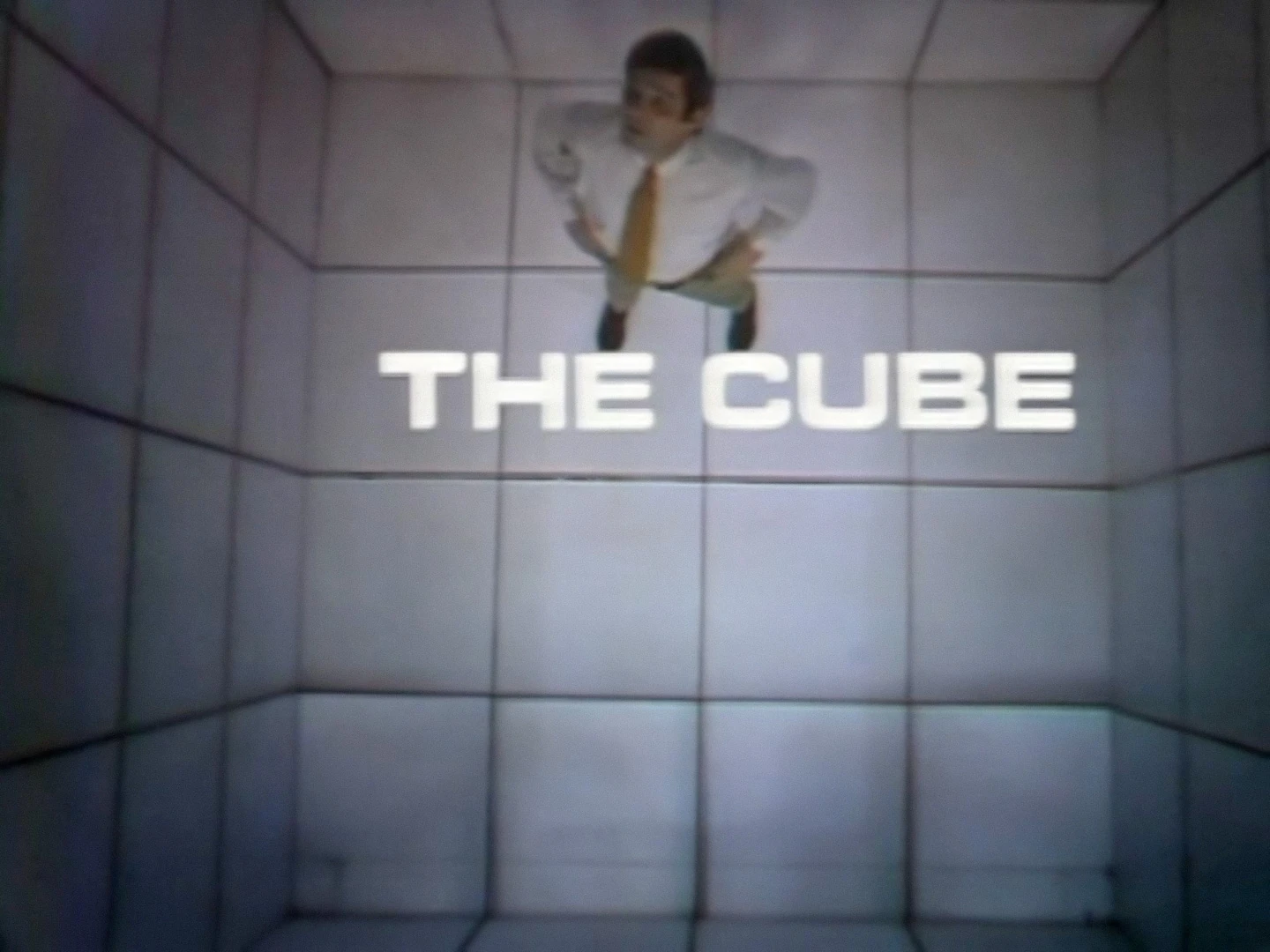

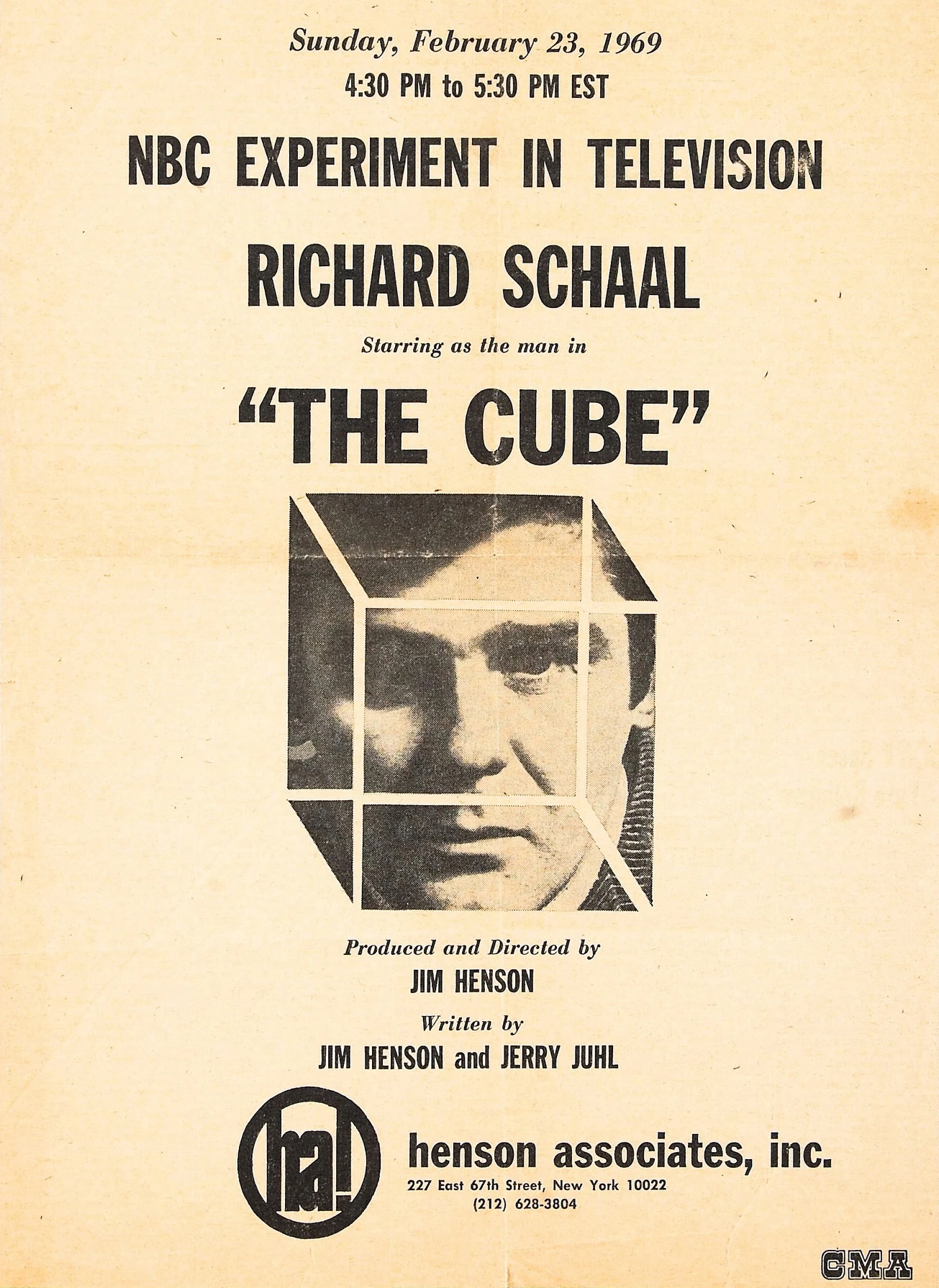

The Cube newspaper poster.
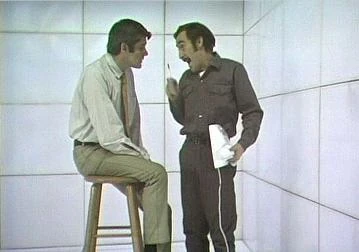

"The Man" meets Arnie
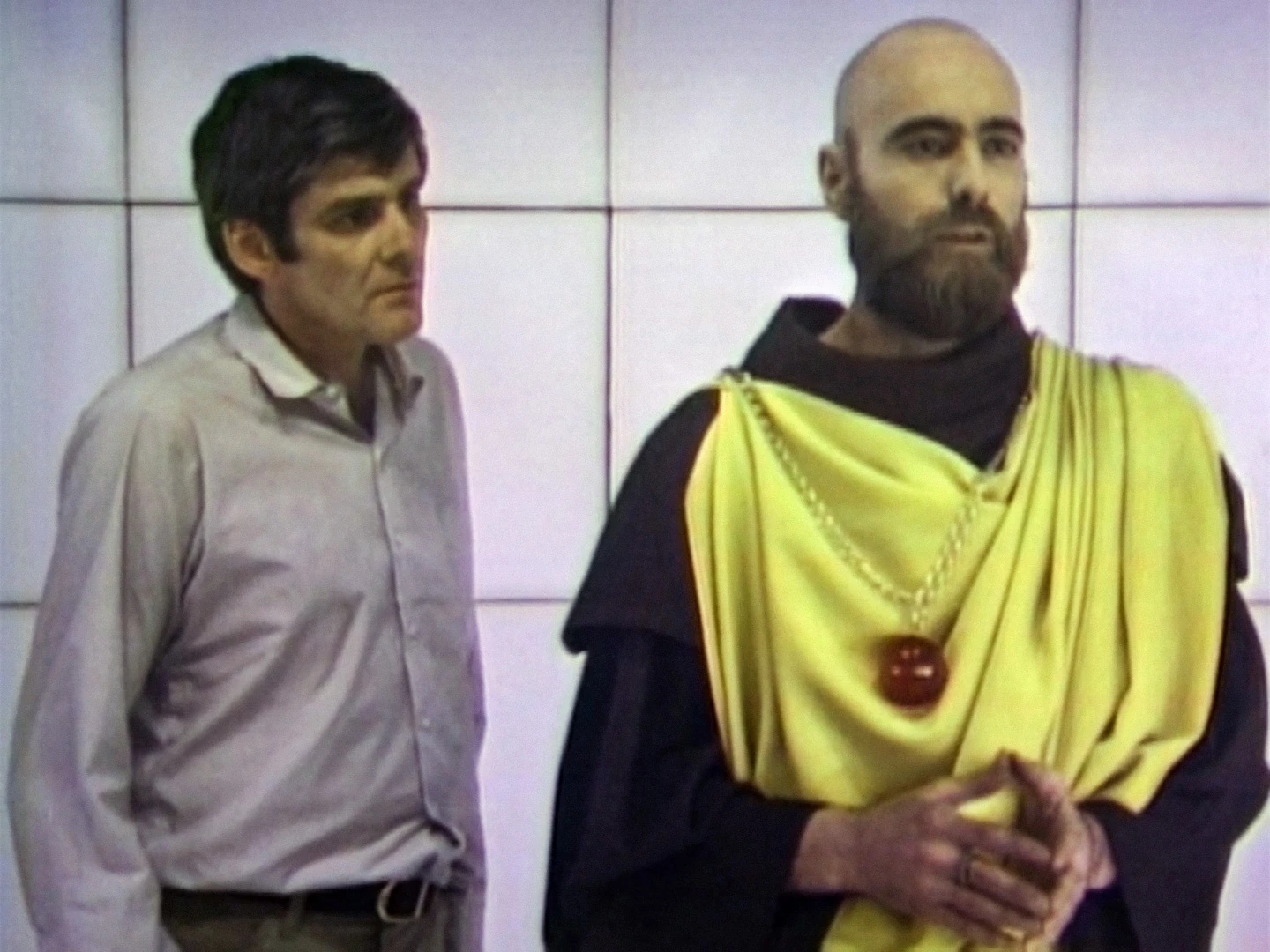

Jerry Nelson as the monk
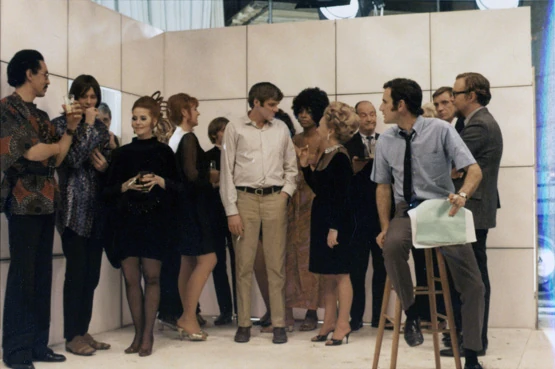

Behind-the-scenes on The Cube
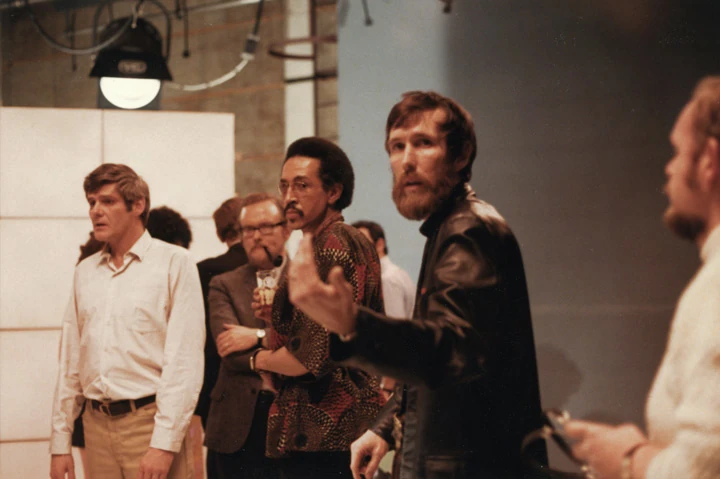

Jim Henson directing The Cube
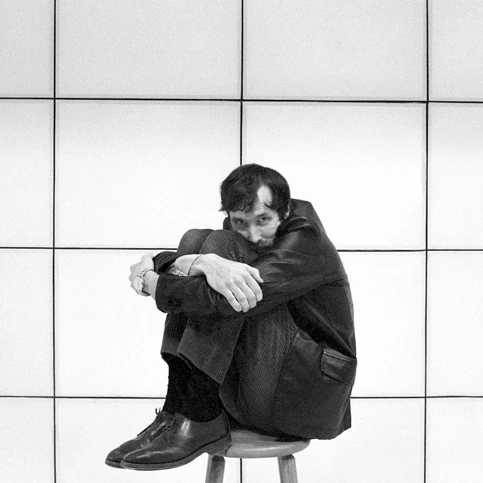

Jim Henson, promotional photo
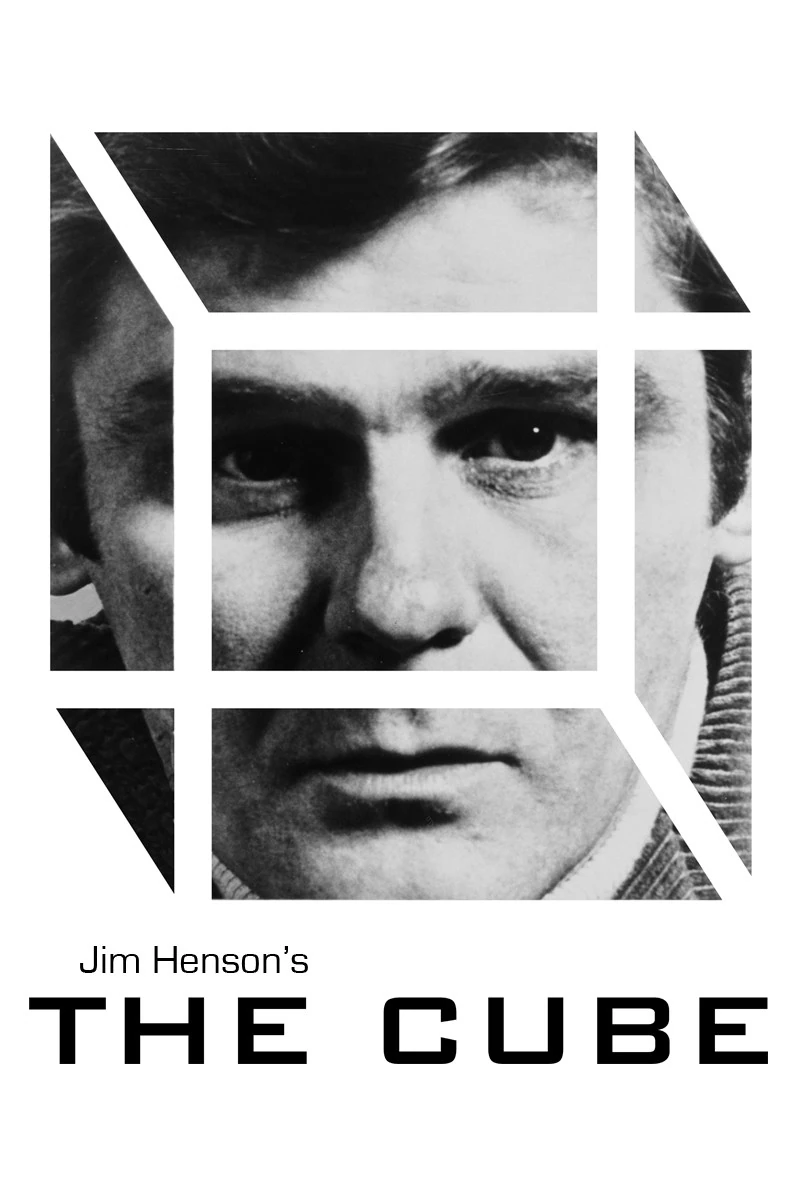

iTunes cover
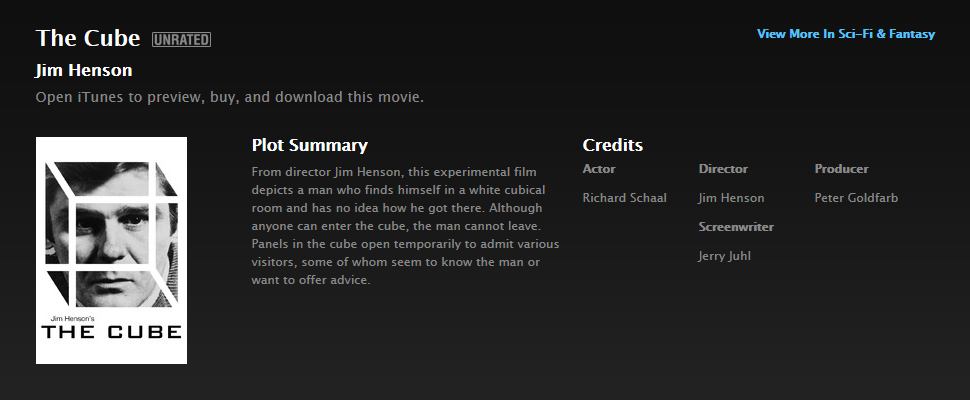

iTunes product page
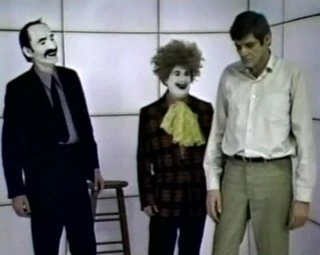

Straight man and comic laugh at the Man
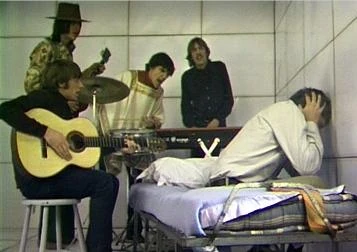

The guitarist and band torment the Man

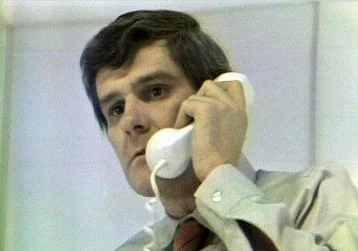

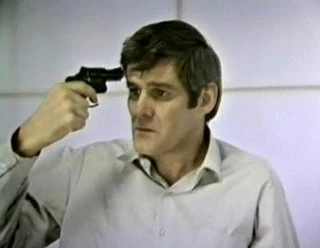

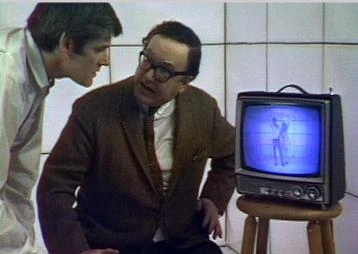

The Cube was an avant-garde drama written for television by Jerry Juhl and Jim Henson (and produced and directed by Henson). The script was initially written in 1966,[1][2] but didn't receive funding until 1968.[3] It was later filmed at CFTO Television studio in Toronto, Canada[4] from February 10th-15th, 1969,[5] and premiered on NBC a mere eight days later on February 23, 1969.
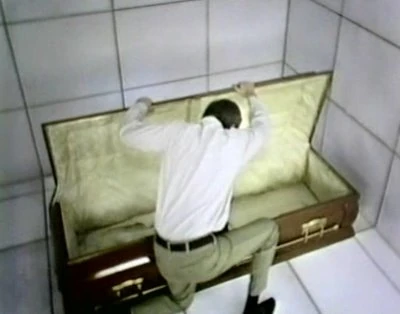
The hour-long piece takes place within a single set: a white, cubed space composed of rectangular panels, in which the nameless protagonist is trapped. A steady stream of characters enter the cube, with recurring visits by the maintenance man Arnie and Mr. Thomas the manager, but they all exit through "their own door." Some visitors seem to know the man or want to offer advice, but they are all generally unhelpful as he tries to unravel the mystery of where he is, how he got there, and how he can leave.
Topics explored include the definitions of reality and sanity, as well as racism and sexuality, and an exploration of spiritual enlightenment. The narrative further examines the nature of freedom and being trapped. There are metatheatrical references to the play's status as a television drama. Jim Henson explained that The Cube "dramatizes the complex, baffling problems of reality versus illusion."[6]
Release history
- The Cube premiered on NBC as part of the anthology series Experiment in Television on February 23, 1969 at 4:30pm.[5]
- CTV aired the special in Canada on September 7, 1969.[7]
- NBC rebroadcast the program two years later, on February 21, 1971.[1]
- The Henson Company released The Cube on the iTunes Store in July 2008, but it was removed sometime around the beginning of 2016. It remains the only commercial release to date.
- The Cube was available to stream on FilmStruck from late 2017 to May 2018 when Henson pulled their content from the service.
- In the Fall of 2018, Fandor acquired the streaming rights to the film.
Reception
The New York Daily News ran their review of The Cube the morning following its initial broadcast. Ben Gross called it a "fascinating offering" and, in comparing it both to the Italian playwright Luigi Pirandello as well as Jean-Paul Sartre's play No Exit, cited it as television's first original drama to concern itself with the topic of illusion versus reality. Gross commended Henson's "consummate skill" in directing what he called the "most interesting item" on Sunday evening's schedule. Complimenting a "remarkably vivid" performance from Schaal and an "engrossing characterization" from Webster as the handyman, Gross surmised that The Cube was fit for repeat broadcasts.[8]
Writing for The Milwaukee Journal on March 3, 1969, Gerald Kloss opined that scribes Henson and Juhl "would appear to be very pessimistic about solving the identity crisis problem in our society." He continued, "If that, indeed, was the theme of the show, it could have been arrived at in half the time, for the succession of weirdo scenes became less interesting as they went on. Some were funny or ominous of themselves, while others were merely arch, and most of them could have been rearranged at random without any damage to the play's continuity. Writing about illusion requires the highest of dramatic discipline, and that, believe it or not, is a reality."[9]
Following a September broadcast of the special on CTV in Canada, Frank Penn of The Ottawa Citizen pointed out the similarities of the piece to the writings of Franz Kafka, Ray Bradbury, and George Orwell who asked comparable "what is reality?" questions "as well, if not better, than Jim Henson." Penn went on to commend CTV for airing a play unlikely to win any ratings prizes, and complimented the "professional polish of the overall production" hoping to see more high-calibre drama from Henson and the production studio. "Canadian television could certainly use it. And that's reality enough for anyone."[7]
Robert W. Racine, writing for the Mass Media Ministries newsletter following the 1971 broadcast, was more forgiving in his review. Racine is enamoured with the big questions The Cube asks, and notes that "the brilliance of it lies in the very singularity of its basic conception. It would have been extremely difficult to prevent the idea that it is from working." He continues to describe the film's reminder "that man is both amused and plagued by ambiguity. There is nothing in all creation that has only one possible meaning or interpretation. This goes double for everything (well, almost everything) in The Cube." Racine further observes that "The life span of the average person has some things in common with the cube. We are boxed in by our ignorance, fear, and helplessness. As biological existence may be theoretically reduceable to one cell, so mankind's awareness can be too. Life for us begins with what we see and touch, but beyond that it is largely a matter of how we put it all together. This man's fearful confusion gradually gives way to angry determination, the latter reaching its fullness when he comes to realize that the first reality he has to affirm is himself."[10]
Several viewers also mailed in letters to NBC following the tele-movie's broadcast, some of which were printed in Jim Henson: The Biography.[6] One viewer wrote, "we're not just sure what we learned from it, but it was quite a relief from the usual TV fare." Others found it "excellent" and "provocative," or "a challenge and a pleasure," while an alternative opinion from one viewer simply stated that "the people who wrote it must be weird." Henson's biographer Brian Jay Jones also included a rare response letter to Mr. Dionne from California who had complained that "the most disciplined attention I could give [The Cube] was a belch from the grave of Marcus Aurelius, occasioned, I might add, by the dead weight of its own dust caving in on itself." Henson's response:
Notes
- Jerry Nelson appears as a monk, to provide spiritual comfort to the man. The monk tells him that "All is all. Is is." This line would be repeated almost twenty years later by Cantus the Minstrel in an episode of Fraggle Rock.
- Jim Henson is heard as the voice of one of the gorillas singing "Home Sweet Home."
- NBC's Experiment in Television had previously broadcast Jim Henson's documentary Youth 68.
- During the encounter with the professor, discussing television drama, the joke credits for The Cube, displayed on a TV set within the main scene, show "Produced by: Don Sahlin" and "Directed by: Joseph Raposo."
- Both The Cube and Time Piece feature brief scenes involving gorilla suits. The suits proved difficult to find in Canada for this production, forcing production to import them from the United States.[5]
- Excerpts from the guitarist's song, prior to the negative "you'll never get out" passage, were included in the 2005 book It's Not Easy Being Green. The audiobook version featured Jerry Nelson reading the lines.
- Jerry Juhl makes an on-screen cameo in a projected party scene, and joins in on a conversation (presumably about The Cube), adding that he didn't care for the ending.
- In 2007, the Glassbooth Company performed a live stage production of "The Cube" at Germany's Freies Theater entitled "Kubus". (YouTube)
Credits
Cast
- The Man in The Cube: Richard Schaal
- Arnie: Hugh Webster
- Manager: Rex Sevenoaks
- Prisoner: Jack Van Evera
- Straight Man & Sergeant: Jon Granic
- Comic & Fritz: Guy Sanvido
- Seductress: Eliza Creighton
- Black Militant: Don Crawford
- Scientist: William Osler
- Monk: Jerry Nelson
- Decorator: Sandra Scott
- Dr. Conners: Claude Rae
- Professor: Don McGill
- Guitarist: Ralph Endersby
- Liza 1: Trudy Young
- Liza 2: Ruth Springford
- Father-in-law & Dr. Bingham: Moe Margolese
- Mother-in-law & Mrs. Stratton: Alice Hill
- Margaret: Loro Farell
- Dr. Bradowski & Old Man: Eric Clavering
- Nurse: Jean Christopher
Crew
- Written by: Jim Henson, Jerry Juhl
- Directed by Jim Henson
- Produced by Jim Henson
- Casting: Pat Barney
- Set Design: Jack McAdam of Design Service Associates
- Electronic Music: Walter Sear
- Associate Producer: David Robertson
- Production Assistant: Joan Chilcott
- Unit Manager: Jack Spiers
- Floor Director: Gerry Bean
- Make-up: Carol Davidson, Janet Nethercot
- Set Dressing: David Jaquest, Gerry Holmes
- Hairstyles: Max Axler
- Technical Director: Jay Gellner
- Lighting Director: Howard Galbraith
- Audio: John Grimsditch
- Video: Percy Brinkworth
- Video Tape Editing: Keith Robinson, Ed Brennan
- Production Facilities: Glen-Warren Productions Limited, Toronto
Sources
- ↑ 1.0 1.1 Jim Henson's Red Book 2/21/1971 – ‘Re-play “The Cube” – NBC.’
- ↑ Jim Henson's Red Book 10/-/1966 “Wrote ‘The Cube’ with Jerry – NBC rejected”
- ↑ Jim Henson's Red Book 2/23/1969 – ‘Sunday, 4:30 p.m. Air- “The Cube.”’
- ↑ Jim Henson's Red Book 4/–/1971 – ‘Editing VTR in Toronto for first screening April 26.’
- ↑ 5.0 5.1 5.2 Jim Henson's Red Book 12/30/1968 – ‘Go-ahead Cube.’
- ↑ 6.0 6.1 Jim Henson: The Biography, Chapter Five, Brian Jay Jones, 2013
- ↑ 7.0 7.1 The Ottawa Citizen "Reality is a mossy Cube" by Frank Penn, Sept 8, 1969
- ↑ New York Daily News "What's On?" by Ben Gross, February 24, 1969
- ↑ Google News Archive
- ↑ Cleveland State University Library