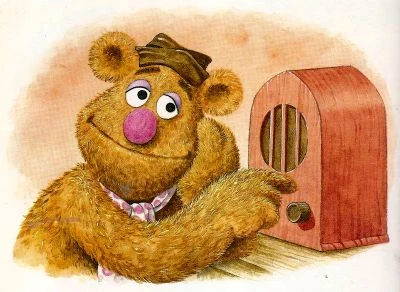

Fozzie listening to a vintage radio set in "Fozzie Goes Overboard"
(First published: Jim Henson's Bedtime Stories)
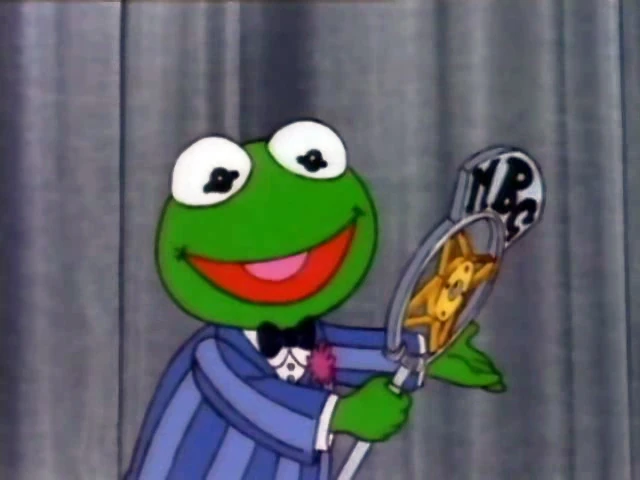

Baby Kermit hosts a broadcast
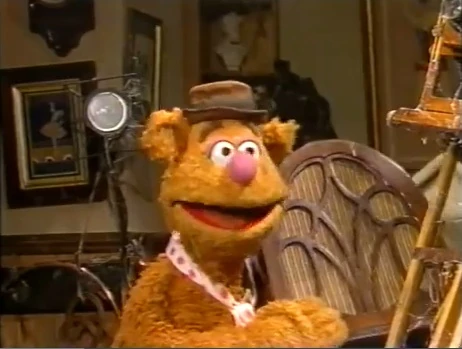

In The Muppet Revue, Fozzie finds a vintage radio set in the attic of The Muppet Theatre.
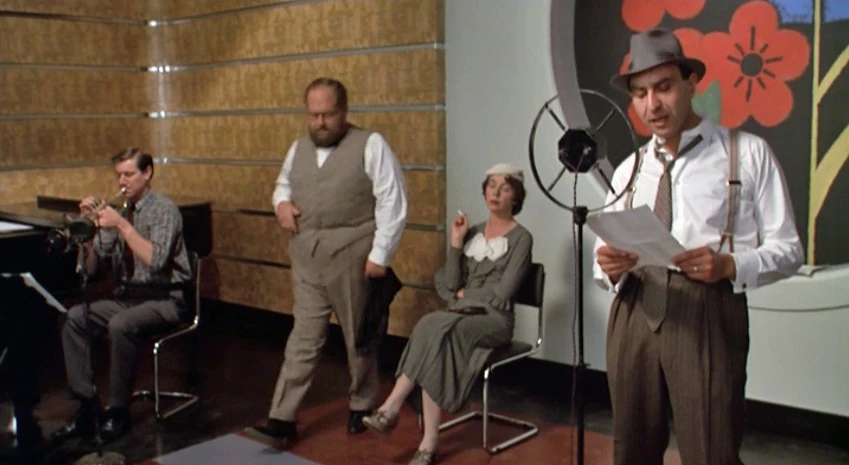

The cast of an American radio drama, as depicted in Dreamchild

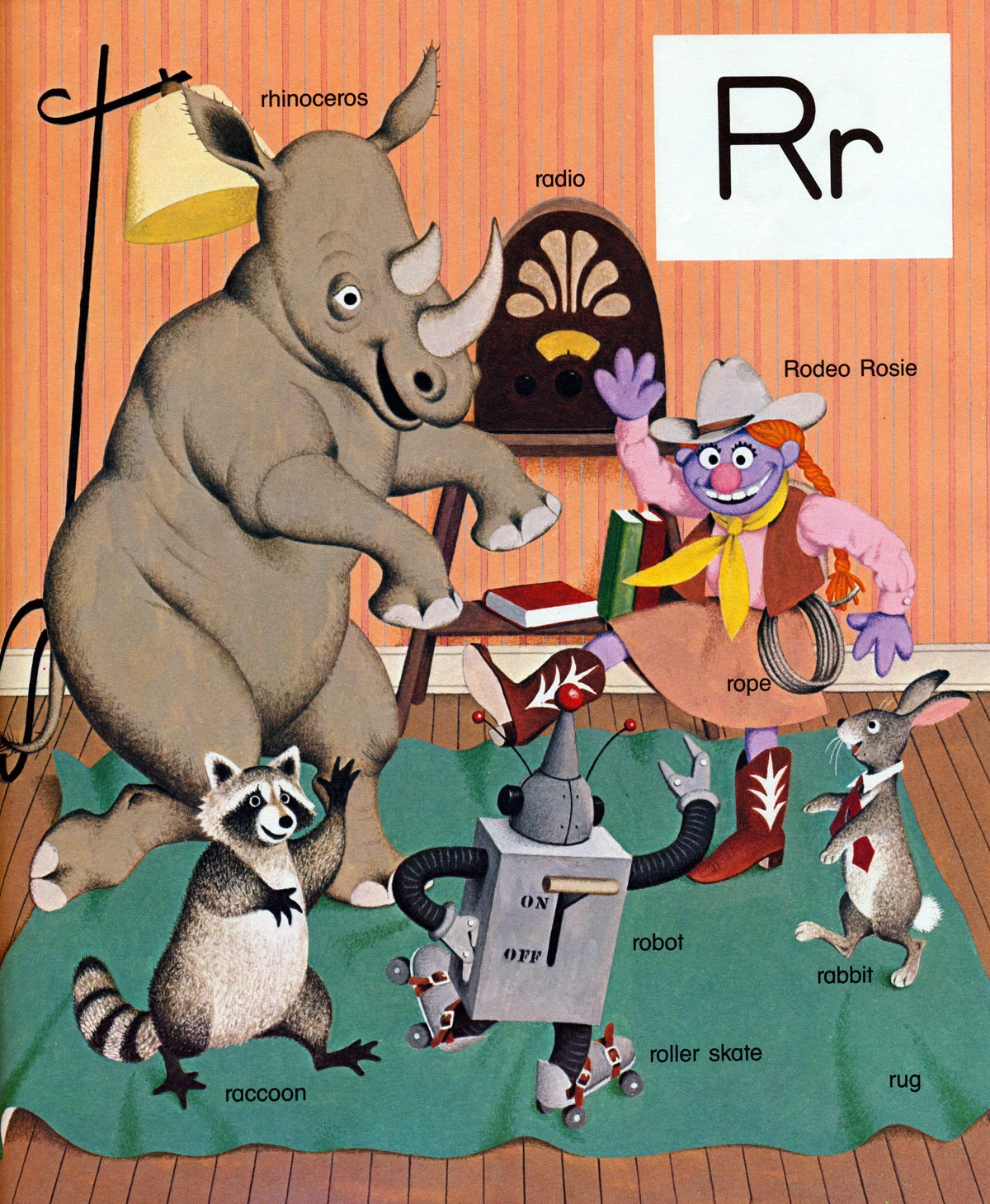

Rodeo Rosie and friends dance around a radio, styled after the Philco cathedral models, in The Sesame Street ABC Book of Words
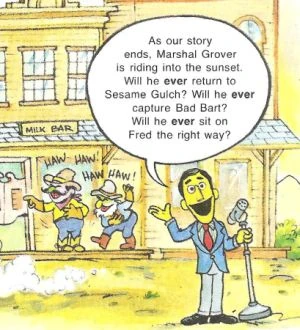

Guy Smiley as radio announcer in The Sesame Street Dictionary
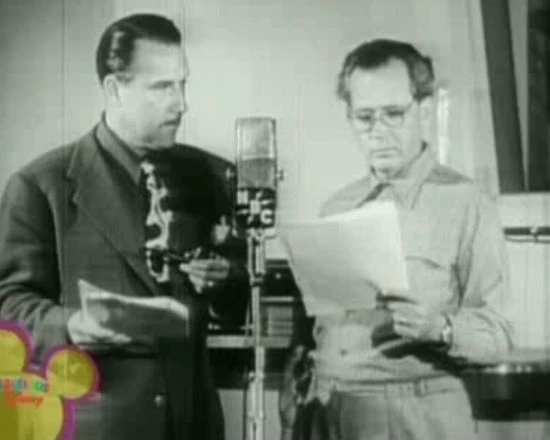

Gale Gordon as Mayor LaTrivia and Jim Jordan as Fibber broadcasting Fibber McGee and Molly in a Muppet Babies clip from "The Muppet Broadcasting Company"
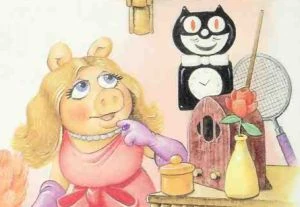

Miss Piggy's old-style radio, along with her Kit-Cat Klock, in "The Garage Sale"
Old-time radio (OTR) is a phrase frequently used by scholars, fans, and companies to refer to a period in American broadcasting history, from roughly 1926 to 1962, when radio was a dominant entertainment medium. While modern radio is dominated by music stations, newscasts, and call-in talk shows, "old-time radio" featured a wide range of programming.
"Old-time radio" encompassed situation comedies, variety shows, game shows, anthology series, dramas, serials, and live band performances. Soap opera as a form originated in radio, and such programs as The Guiding Light went on to equally long runs on television. Other radio series which successfully transferred to TV include Gunsmoke, Dragnet, and The Lone Ranger. Comedians whose reputations were made in radio included Jack Benny and Fred Allen, while burlesque and vaudeville performers like Abbott and Costello found a new venue for their verbal routines. Mellifluous announcers, live sound effects (often created through household implements), and dramatic tag openings characterized the programming of this period. Contrary to the impression that old radio was always "tamer" than television, sound men on mystery programs employed such techniques as chopping a head of cabbage with a machete to simulate decapitation, or grilling bacon to suggest searing flesh.
The phrase "old-time radio" has also been applied to programs of like vintage from England (such as The Goon Show), Australia, or Canada, but less frequently since radio has largely retained the same basic scope and significance in these countries, with the BBC still producing regular dramatic series, adaptations, and sitcoms. Within the United States, with the exceptions of occasional revivals, mostly as syndicated series, and sporadic dramas on NPR, radio programming of this stripe is relegated to the past, but made available through record, tape and CD collections, online archives, regional re-broadcasts, live recreations, and satellite radio channels.
Arguably the last network radio comedy was The Stan Freberg Show on CBS in 1957. Most soap operas ended in 1960, as the genre moved to television. The mystery series Suspense and Yours Truly, Johnny Dollar both ceased in the fall of 1962. Thus, Jim Henson grew up during the tail-end of the radio era, and was exposed to such series as The Shadow and The Green Hornet.[1]
Influence
The announcing style used on these programs was largely adopted by Jerry Nelson, as the announcer on The Muppet Show and in other productions. Nelson recalled his fondness for old-time radio and how it influenced him in multiple interviews with his local NPR station:
Caroll Spinney has also discussed how radio influenced him:
Writer Joseph A. Bailey discussed radio and how it influenced some of his Sesame Street writing:
Additionally, such long-time radio staples as Bob Hope, Edgar Bergen, and George Burns were guest stars on The Muppet Show, and subsequent Muppet/Creature Shop productions would occasionally reference or pay homage to old-time radio, either individual programs, or as a collective entity.
References
General
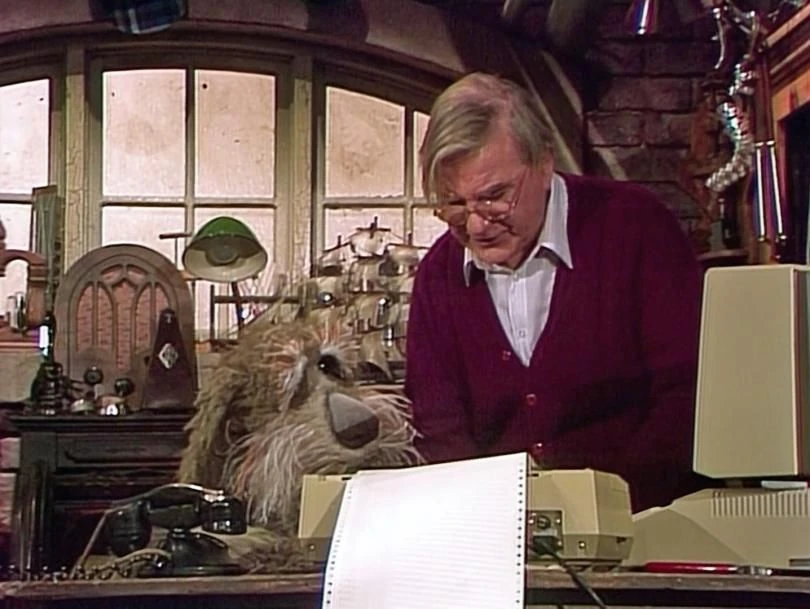

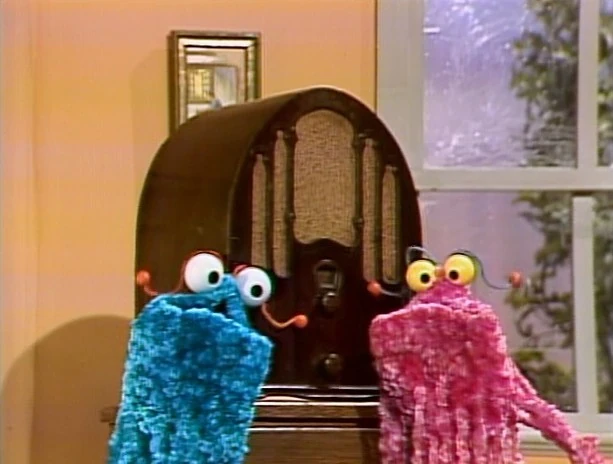
- Well into the 1980s, on most occasions when Muppets would listen to radios (on Sesame Street, The Muppet Show or in books), the radio in question would be an old-fashioned wooden model, often with glowing dial, resembling the famous RCA or Philco models. A typical example occurs when the Martians discover what a radio is. (First: Episode 1329) This breakthrough in interplanetary communications occurred years after national radio audiences discovered Martians (through the 1938 War of the Worlds broadcasts).
- An old-fashioned radio is also a regular part of the furnishings in Doc's workshop on Fraggle Rock. However, for practical listening purposes, Doc usually utilizes newer or home-made experimental models.
Early Muppets
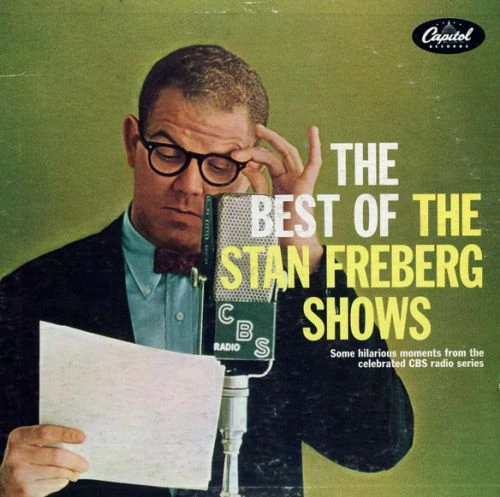

The Best of the Stan Freberg Shows, the most heavily mined source of radio related audio used on Sam and Friends
- The Sam and Friends skit "The Westerners" featured Kermit and Chicken Liver lip-synching to the record version of a segment from Bob and Ray's Mutual radio series (1955-1957).
- Several sketches from The Stan Freberg Show (as collected on the 1958 Capitol Records set The Best of the Stan Freberg Shows) were used multiple times on Sam and Friends.[5] These include "Elderly Man River," "Abominable Snowman," "Face the Funnies," and "Herman Horne on Hi-Fi," as well as record singles adapted from radio segments. Also heard are series regulars Daws Butler, Peter Leeds, and June Foray (the future voice of Rocky the Flying Squirrel).
- Also used on Sam and Friends was "Real Gone Galoot" (1950), written and sung by dialect comedian Harry Stewart as his radio character Yogi Yorgesson.[6] The Swedish-accented Yorgesson (first name Yogi originally because of a mystic gimmick) originated on Al Pearce and His Gang in the 1930s, moving on to records.
- In Hey Cinderella!, the Fairy Godmother wears a mask to the ball, saying she received it from a friend, a "very generous fellow... wanted to lend me his faithful Indian companion as well" a reference to The Lone Ranger, which began life on radio at station WXYZ on January 31, 1933.
- In The Great Santa Claus Switch, when Fred the Elf is taken prisoner, he claims that he is not merely a "mild-mannered" toy builder, but "Super Elf, able to leap tall buildings in a single bound." This text is from the opening narration of The Adventures of Superman radio serial (1940-1951), which starred Clayton "Bud" Collyer as Superman, and used in several subsequent versions. A variation of the spiel was also used in many Super Grover installments.
The Jimmy Dean Show
- When Jimmy Dean tries to show Rowlf how to eat his soup like a gentleman in the October 8, 1964 broadcast, he says prim and proper, and Rowlf replies "Like Clem Kadiddlehopper" and gulps the soup. Clem Kadiddlehopper was Red Skelton's country bumpkin character, who he was then playing on TV but had originated on radio in 1941.
- In a fantasy imagining Rowlf married to an unseen Lassie in the February 11, 1966 broadcast, Jimmy Dean visits the couple by saying "Somebody home, I hope-I hope-I hope." The line is a variation of the catchphrase (beginning "Nobody home") of comedian Al Pearce's salesman character Elmer Blurt, popular on Al Pearce and His Gang in the thirties and forties.
- In the February 18, 1966 broadcast, in a Batman spoof with Rowlf, Jimmy Dean goes from Robin's traditional holy exclamations to quoting the Kingfish of radio's Amos 'n Andy: "Holy mackerel, Andy."
Sesame Street
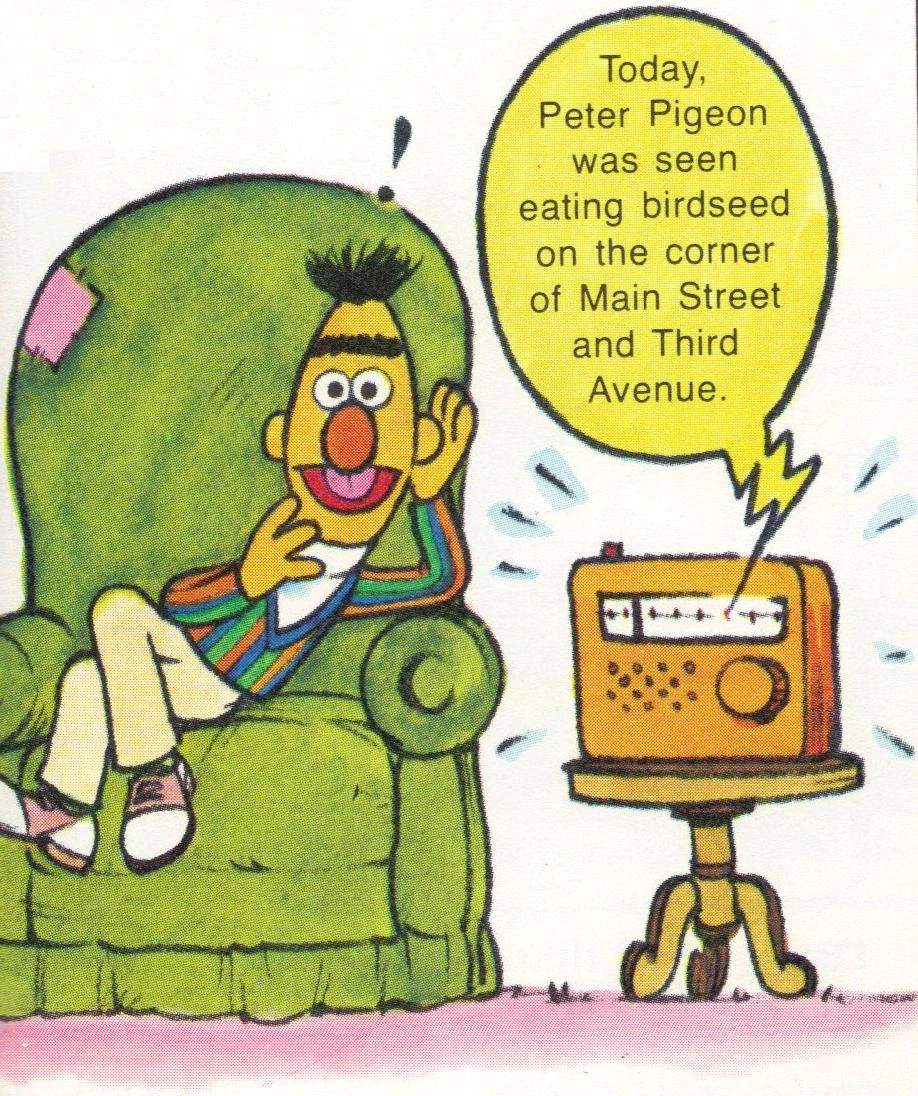

Bert listening to his favorite radio program.
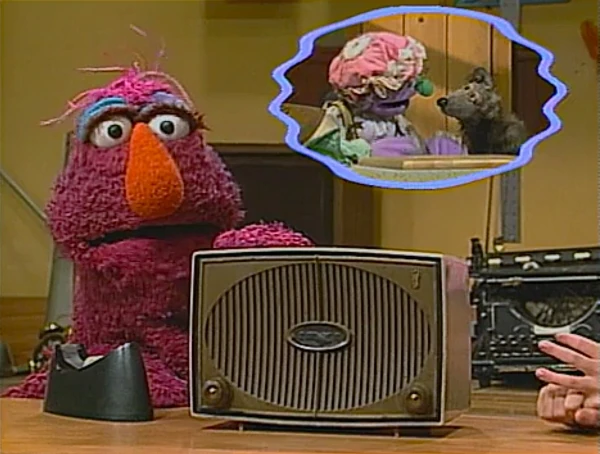

Telly picturing what he hears in a radio drama in Episode 3143.
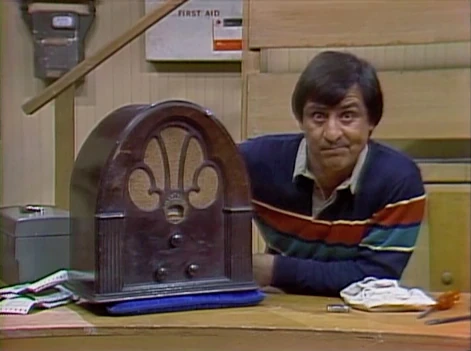

Luis is baffled by a talking cathedral-style old radio in Episode 1728.
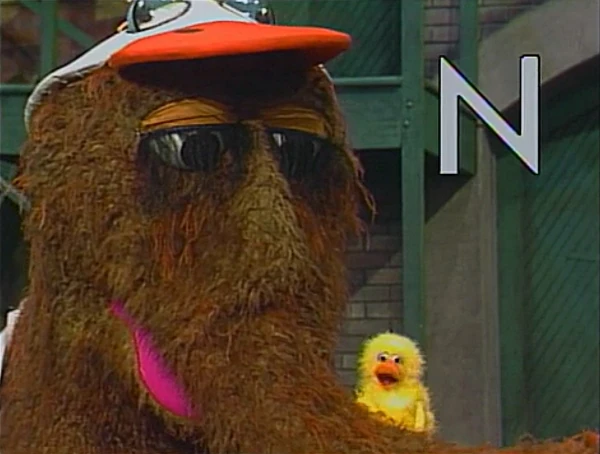

Snuffy in Episode 3095: "Say goodbye, Gracie."
- Sesame Street frequently referenced old-time radio shows specifically, from Dragnet to You Are There, but often incorporated elements and phrases, particularly in the style of the announcers and use of organ music, as well as merging aspects of various shows.
- One notable example is Granny Fanny Nesselrode's "Answer Lady" skits. Her announcer (Jerry Nelson, using a New England twang), brings the show from "her cozy, sunfilled kitchen in Goat Corners, New Hampshire." The intro, cozy kitchen setting, and interaction between Granny and the announcer are all derived from Aunt Jenny's Real-Life Stories, a soap opera which ran from 1937-1956 in which Aunt Jenny would tell the announcer a weekly serialized story. However, the skit intro also recalls the Bob and Ray parody of Aunt Jenny, Aunt Penny's Sunlit Kitchen, and the advice format comes from many radio shows, notably John J. Anthony's The Goodwill Hour (1937-1953).
- The Sesame Street serial "Hunt for Happiness" parodies radio soap operas (including introductory narration and organ backing), especially those produced by Frank and Anne Hummert. It uses the Hummert trademark of characters placing an identifying adjective before every name and repeating it ("Oh, Brother Harold Happy") and the tradition of strange calamities befalling characters, as on The Romance of Helen Trent (1933-1960) and others. Grandmother Happy, the only sensible member of the family, is based on the wise title character on the Hummerts' Ma Perkins (1942-1960).
- Some of Lefty's catchphrases and personality reflect a composite of two radio characters, "The Tout" from The Jack Benny Program and "The Salesman," played by Eddie Marr on Jack Carson's The Camel Comedy Caravan in 1943. The Tout would greet Jack Benny in a breathy, gangster-style undertone and say "Hey, bud... c'mere a minute," to which Jack would usually respond "Who, me?" (echoed by Ernie in many sketches). Eddie Marr's salesman character had as his catchphrase "Tell ya what I'm gonna do." The Lefty/Ernie story "Ernie Buys a 12" (First published: Big Bird's Busy Book) includes examples of all of these phrases.
- The balloon man in Episode 0059 says "What a revolting development this is!" which was the signature phrase of Chester Riley on The Life of Riley (1944-1951).
- The game show "Dialing for Prizes Movie" has photos of older celebrities on the wall, including a publicity photo of Fanny Brice as Baby Snooks, used to promote the radio show (1944-1951).
- The radio shows Oscar the Grouch listens to in Episode 0385 combine references to multiple radio music broadcasts of the thirties and forties. The "of the Air" subtitle (Grouch Music of the Air, Nice Music of the Air) was used on multiple shows but in the realm of music was associated with The NBC Symphony of the Air (1940s-1950s). The Grouch Music intro "coming to you from high atop the city dump" references the way announcers introduced big band remotes as coming from high atop swank hotels or rooftop restaurants. The descriptions of both shows, "the grouchiest, yuckiest music this side of Mudville" and "the nicest, sweetest music this side of the Land of the Sugar Plum Fairies," draw from Guy Lombardo's radio intro, boasting "the sweetest music this side of Heaven."
- A sound effects cue in the script for Episode 0386, as Big Bird imagines Rafael dropping a TV set, calls for a "terrible crash, like Fibber Magee's (sic) closet." The best remembered running gag from Fibber McGee and Molly (1935-1956) was the clatter from numerous objects falling out whenever Fibber opened the hall closet door.
- When Oscar the Grouch shows off the broken records he found at the dump in episode 0390, he says one of them is of Sergeant Flagg and Captain Quirt, reversing the ranks of Captain Flagg and Sergeant Quirt, a short-lived radio sitcom (1941-1942) featuring characters from the play and film What Price Glory? The supporting cast included Cliff Arquette.
- The train engineer in "Beat the Time: Cookie Monster" calls for passengers to board, ending "and Cucamonga," referencing a running gag on The Jack Benny Program.
- Oscar exclaims, "What a revolting development this is!" (referencing The Life of Riley again) as he muses over his day in Episode 0756.
- Mr. Snuffleupagus sends away for a Little Orphan Annie ring, one of many premiums offered by the radio show, in Episode 0962.
- In Episode 0997, after being told by Gordon that his crabapple tree needs time to blossom before producing the fruit, Oscar moans, "What a revolting development this is!" (The Life of Riley again.)
- In an Ernie and Bert sketch, Bert is listening to Pigeons in the News, his favorite radio program. The series and its announcer (Jerry Nelson) imitate the style of Walter Winchell's radio news series (1931-1957), using a telegraph key sound to transition between stories and phrases like "Dateline Cleveland." In The Sesame Street Dictionary, Bert can be seen listening to a similar program on his radio.
- Also in The Sesame Street Dictionary, in the entry for the word "ever," Guy Smiley is seen as a radio announcer, narrating the adventures of Marshal Grover and ending on a cliffhanger note, in the style of The Lone Ranger or especially the many radio adventure serials.
- Big Bird opens Episode 2194 by telling the audience, "Ah, ah ah, don't touch that dial!" That was the standard introduction to Blondie on radio for most of its run (1939-1950).
- Episode 3095 features Snuffy bonding with a duckling named Gracie. At episode's end, he tells her, "Say goodbye, Gracie." "Say goodnight, Gracie" was a common closing for George Burns and Gracie Allen on radio, and continued into TV. A popular misconception was that she responded, "Goodnight, Gracie!" which has also been echoed at various times by Muppets.
- Episode 3123 features The Adventures of SuperWorm, announced in the manner of The Adventures of Superman. For the closing, the announcer utters the "Up, up and away!" spoken on radio by Superman himself (since listeners couldn't actually see Superman flying, the phrase signaled the action.)
- Episode 3143 centers on canine station WUFF Radio. In addition to more modern radio formats (traffic reports, call-ins), one of the shows is "Puppy Dog Tales," which old-time radio style, has Terry Terrier reading a story while "you listen and use your imagination to make pictures in your head" (summing up the appeal of classic radio shows).
- In "Elmo's World: Books," the Book Channel promotes "Our Miss Books," referencing the radio sitcom Our Miss Brooks (1948-1957), which also ran concurrently on TV from 1952-1956, with most of the same cast.
- The seasonal Sesame Place stage show The Not-Too-Spooky Howl-o-ween Radio Show is a live old-radio style performance, with a sound effects person called Foley P. Foley.
The Muppets
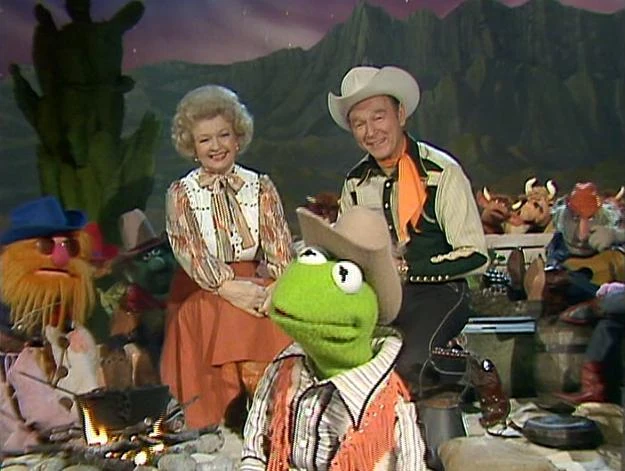

Roy Rogers, with Dale Evans, utters his radio closing signature: "Goodnight, good luck, and may the good Lord take a likin' to ya."
- On The Muppet Show episode 422, Andy Williams briefly tells Scooter how he got his start in show business, singing with his brothers as a quartet on the radio in Iowa (although not specified in the episode, station WHO's Iowa Barn Dance to be precise).
- Roy Rogers closed his radio show by wishing his audience "Goodbye, good luck, and may the good Lord take a likin' to you." With a "goodnight" change, he used it when he guest starred on episode 322 of The Muppet Show. A variation was used by Rowlf (as Dr. Bob in Vet's Hospital) in episode 524, as a joke written by Don Hinkley: "Good night, and may the good Lord take a Viking to you."
Dog City
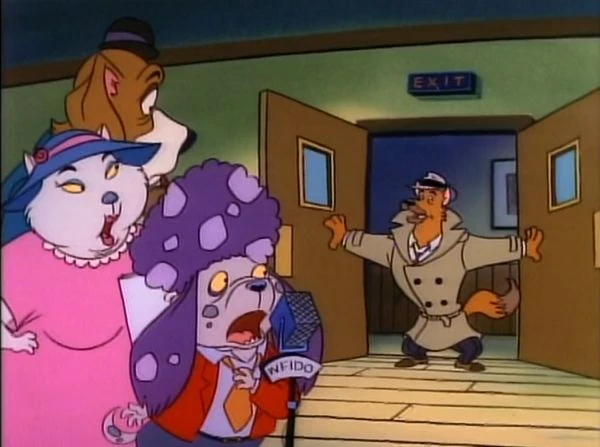

Ace Hart and the cast of radio's A Dog's Life
- The first season Dog City episode "Radio Daze" involved Ace Hart in a crime wave at radio station WFIDO, involving attacks on the cast and crew of the soap opera It's a Dog's Life. The title references a trend in the titles of most radio soap operas (Road of Life, Life Can Be Beautiful). The culprit turns out to be the enraged sound effects man. The episode also references Orson Welles (as announcer Orson Welp). A favorite radio show mentioned by Mr. MacTaggart is The Creaking Kennel, a reference to horror show Inner Sanctum (1941-1952) and its famous creaking door opening.
- The first season episode "Rocketship K-9" parodies The War of the Worlds; while mainly focusing on visual versions of the tale, the Orson Welles' radio broadcast is referenced in a newscaster reporting from Rover's Mill (Grover's Mill, New Jersey in the original broadcast).
- The third season episode "Comedy of Horrors" featured Baron Von Rottweiler examining Eddie's brain and saying "So round... so firm... so fully packed," a reference to the Lucky Strike slogan made famous by commercials on radio's Jack Benny Program.
Muppet Babies
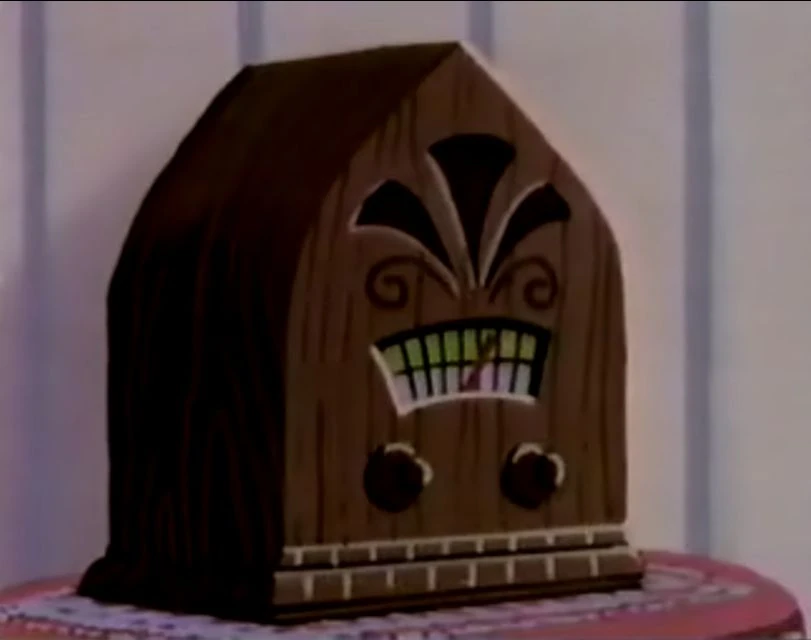

"This Old Nursery"
- The Muppet Babies episode "The Muppet Broadcasting Company" featured an extended salute to old-time radio, as the Babies imagine themselves in versions of such diverse series as The Adventures of Sherlock Holmes, Captain Midnight, The Shadow, George Burns and Gracie Allen, the big band broadcasts of Duke Ellington, and more. Clip footage briefly appeared showing the cast and crew of the sitcom Fibber McGee and Molly, including actors Jim Jordan (Fibber) and Gale Gordon (Mayor LaTrivia) and the sound man creating the famous closet gag (as junk tumbles from Fibber's hall closet).
- The sixth season episode "This Old Nursery" has Baby Piggy imagine listening to a 1930s radio band broadcast of Rowlf Ellington and his band, with Kermit as announcer. Piggy hurries to Radio City Music Hall to fill in as singer, but can only sing one note because "the old clock on the wall" says they're out of time. "The old clock on the wall" was a common radio cliche, already identified as a cliche in announcer handbooks by 1959, often used for band remotes or other less informal programming as a sign-off.
Others
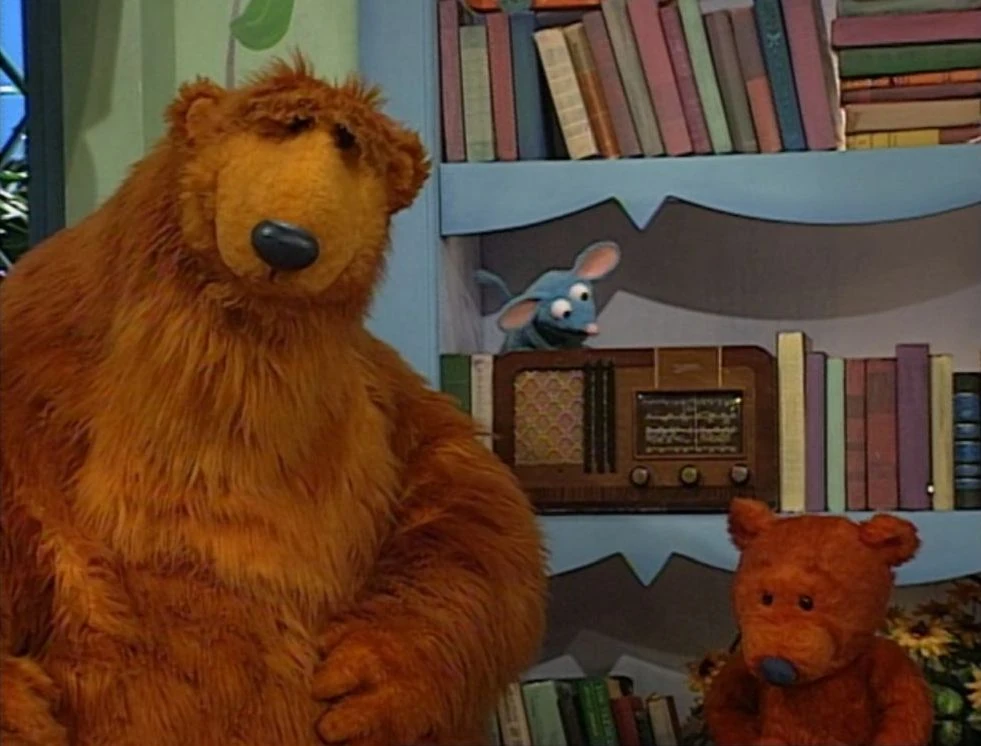

- At the start of the second season Bear in the Big Blue House episode "It's a Mystery to Me," Bear, Tutter, and Ojo listen to their favorite radio show, Nick Kodiak, Bear Detective. Featuring a typical radio private eye (with a Bogart-ish voice), the show includes the standard stentorian announcer (Tyler Bunch) and dramatic organ stings as Nick Kodiak investigates "The Case of The Three Bears."
- In Dreamchild, while visiting New York City, Alice Hargreaves sits in on an old-time radio broadcast, an adventure drama. The sound man (Ken Campbell) employs coconut shells as horse hooves, a common trope in the radio era. Mrs. Hargreaves subsequently delivers a radio commercial, playing on her reputation as "Alice in Wonderland."
Connections
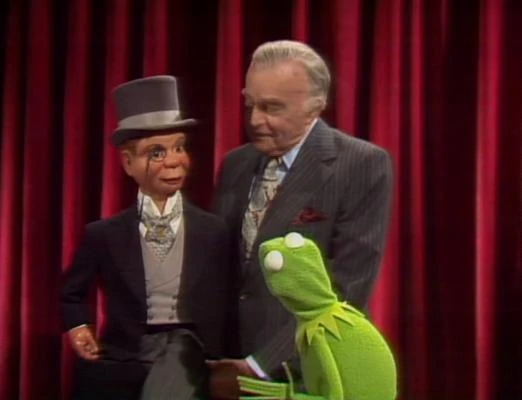

Bergen and McCarthy, two of radio's biggest stars, on The Muppet Show
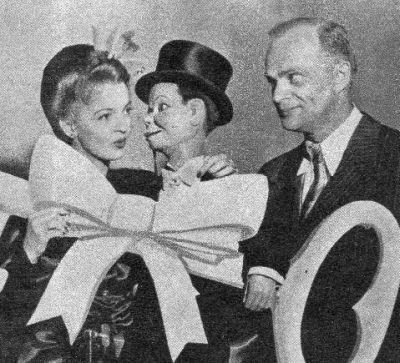

Dale Evans, Charlie McCarthy, and Edgar Bergen in the 1940s, before their Muppet Show guest spots
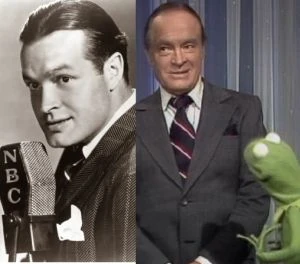

Radio comedy star Bob Hope still found time later on to work with green talent
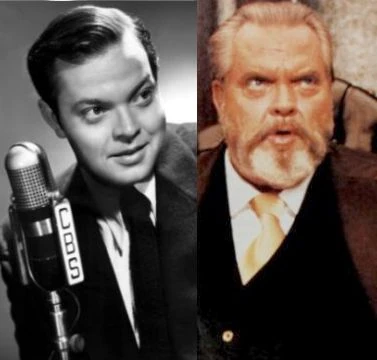

Orson Welles, in his CBS radio days and then as Lew Lord in The Muppet Movie
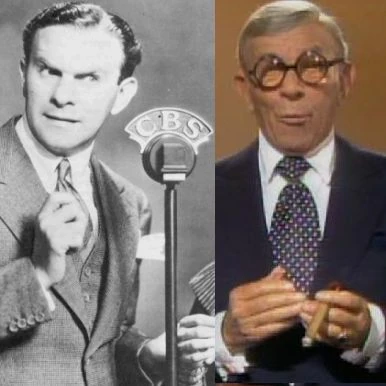

Future Muppet Show guest George Burns was on radio weekly, with Gracie Allen, from 1932 until they shifted to TV in 1950
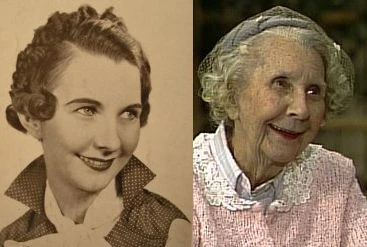

Radio vocalist Loretta Clemens in a 1935 publicity pic, left, and as she appeared decades later on Sesame Street as recurring visitor Miss Trump
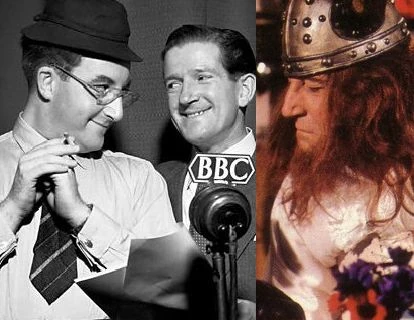

Peter Sellers on BBC radio's Ray's a Laugh in the 1950s, and on The Muppet Show
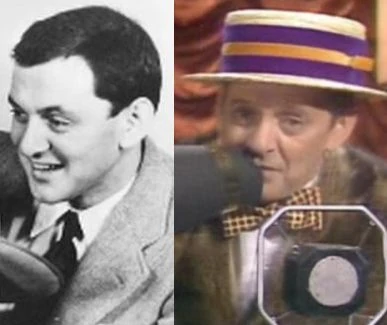

Tony Randall as Reggie Yorke on I Love a Mystery, and back before the mike on The Muppet Show
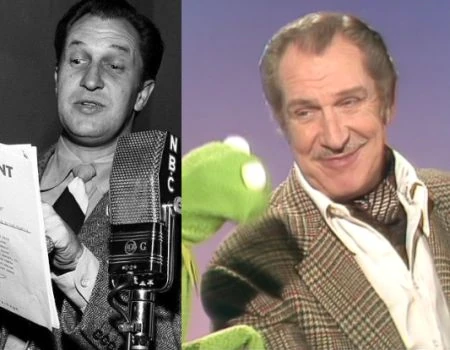

Vincent Price as radio's The Saint and on The Muppet Show
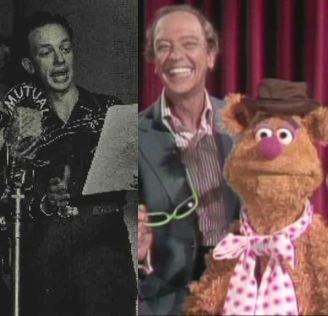

Don Knotts as Windy Wales on Bobby Benson in the 1950s, and on The Muppet Show
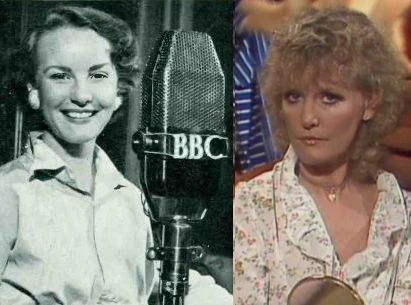

Petula Clark was comfortable behind a mike or in front of a moose
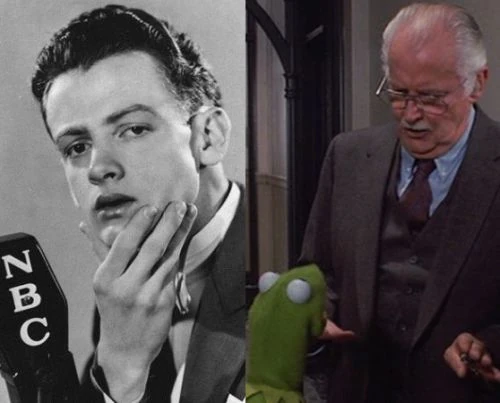

Art Carney as an NBC radio actor in the forties, and in his later years listening to frogs pitch Broadway shows
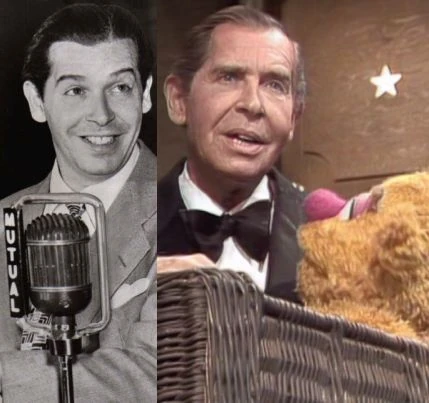

Milton Berle at the mic in 1941, and with the bear on The Muppet Show
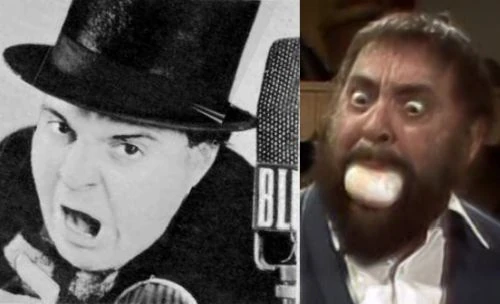

Zero Mostel's first national exposure on The Chamber Music Society of Lower Basin Street, and on The Muppet Show
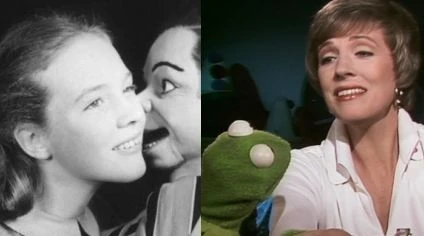

Julie Andrews was on radio with a ventriloquist dummy, so singing to a frog was an easy transition
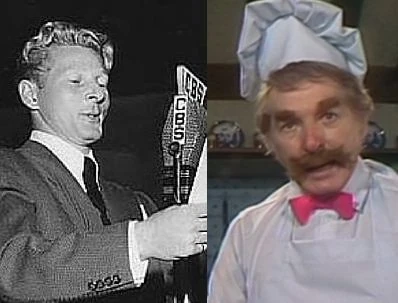

Danny Kaye's radio show lasted a year, but he tended to fare better in visual media
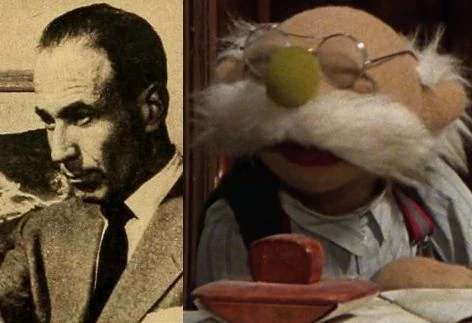

Peter Capell, in a promo shot for radio's Stella Dallas, was later the German voice of Pops
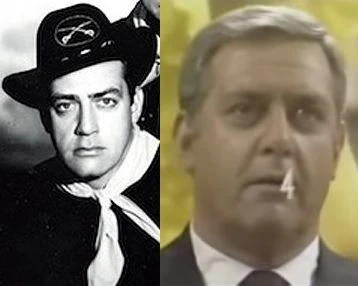

Raymond Burr starring on Fort Laramie and later counting to twenty on The Flip Wilson Show
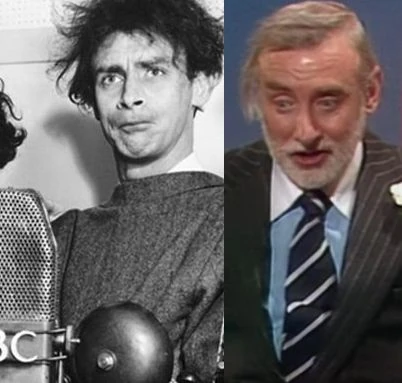

Spike Milligan remained a Goon, on BBC Radio or The Muppet Show
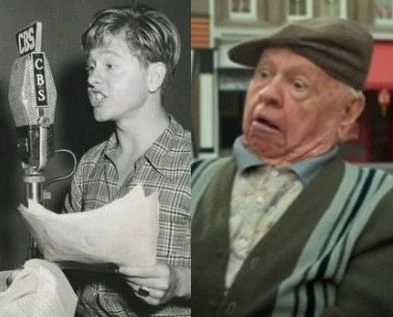

Mickey Rooney went from Babes in Arms (1939 radio version) to Snowths at his bench in The Muppets
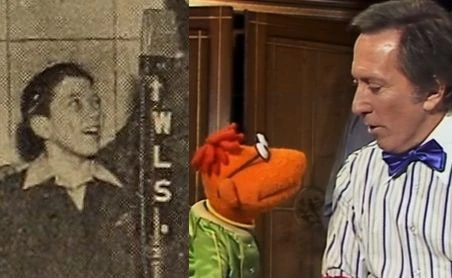

Andy Williams as a child on National Barn Dance and recalling his early radio singing with Scooter
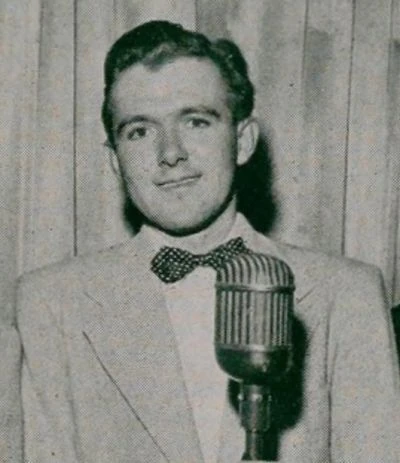

Frequent Sesame Street cartoon voice Bob Arbogast in his radio days
Several people who worked behind the scenes with the Muppets were directly related to radio personalities.
- Bernie Brillstein's uncle was Jack Pearl (1894-1982). Pearl, a former vaudevillian, created the character of Baron von Munchausen, teller of tall-tales and incorrigible liar, on The Ziegfeld Follies of the Air (1932) and soon headlined his own series, under various names, until 1937, with revivals up until the 1954 quiz show The Baron and the Bee.
- Jeff Moss's father, Arnold Moss (1909-1989), played various character roles on the soap operas Jane Arden (1938-1939) and Against the Storm (1939-1940); served as "the Speaker," the deity-like narrator on The Light of the World (1947); played villains and aliens on The Adventures of Superman (1950s); and was a regular as Col. Lesko on Cafe Istanbul (1952-1953), among others.
- Tom Whedon's father, John Whedon (1905-1991), was a staff writer on The Great Gildersleeve (1941-1947) and also wrote for Edgar Bergen's The Chase & Sanborn Hour (ca. 1937) and the sitcom Hogan's Daughter (1949).
In addition, many guest stars on The Muppet Show and in movies, plus others with Muppet connections, had widespread experience from the "golden age of radio," or in more recent old-time style revivals.
- Eddie Albert was a rotating lead star on The NBC Radio Theater (1959-1960; aka Five Star Matinee) and guest starred on Spike Jones' Lifebuoy Show (1943), The Cavalcade of America (1948), and others
- Steve Allen began as a radio announcer in 1942, starred on Smile Time (ca. 1945-1947), had a disc jockey show Breaking All Records (1947), and starred in the CBS summer replacement series It's a Great Life (1948) and other slots between 1950 and 1953
- Julie Andrews was the resident singer on the comedy series Educating Archie (BBC, 1950-1952) and The Pleasure Boat (1953)
- Bob Arbogast starred on The Arbogast Show (or simply Arbogast) on WHB (Kansas City, Missouri, 1950-1951) and WMAQ (Chicago, 1951-1953)
- Buddy Arnold sang as half of the duos Kay and Buddy Arnold (with sister Kay, 1935-1939) and Betty and Buddy (1939-1940, 1945-1946), which he also scripted and music arranged
- Fred Astaire starred on The Packard Hour (1936-1937)
- Richard Attenborough hosted disc jockey series on the BBC (1950-1963), played John Harmon in a serialized Our Mutual Friend (1950), George Braithwaite on the sitcom My Friends the Braithwaites (1951), the host of Home at Eight (1952), and others
- Lauren Bacall played Sailor Duval on Bold Venture (1951-1952)
- John Baddeley played various roles on The Children's Hour (1956-1961) and the storyteller on The Word (1961)
- Pearl Bailey guest starred on various variety and music series, including Command Performance (1944), The Kraft Music Hall (1945), and Alec Templeton Time (1946)
- Kenny Baker played trumpet on BBC Radio with the dance orchestra of Fighter Command (1942), with the band of the AEF (1945), and led his own Kenny Baker's Dozen on regular series Let's Settle for Music (1952-1958)
- Leo Bardischewski played many roles on German radio from 1947 onward, including four Shakespeare plays (1951-1964), Leslie Forrester in the Gestatten, mein Name ist Cox serial "Die kleine Hexe" (1963), and various parts in the Paul Temple serial The Conrad Case (1959) and Inspector Hornleigh (two episodes, 1960)
- Wade Barnes was a staff announcer at various stations including WHBC Canton (1938-1939, as chief announcer), WTAM Cleveland (1939-1942), and WCAU Philadelphia (1942-1943) including hosting The Funny Money Man (1942)
- Sean Barrett played Timmy in One Eye Wild (1952), Puck in A Midsummer Night's Dream (1956) and Eddie in It Was Only a Joke (1962)
- Timothy Bateson read poetry on two episodes of Poetry Reading (1949), played Hyacinth Robinson on the serial The Princess Cassmassima (1956), and roles in many Children's Hour installments (1954-1961), including adult Pip on the serial Great Expectations (1958), the title character on the serial Carbonel (1959), and Edvard Grieg in "The Music Maker of the North" (1960)
- Geoffrey Bayldon played Edwin Clayhanger on Clayhanger (1953-1954), Tom Walters in the plays Poet and Pheasant (1956) and Annual Outing (1959), and appearances in other BBC radio plays
- Batman and Robin were semi-regulars on The Adventures of Superman (1941-1951) and starred in an audition show (pilot), The Batman Mystery Club (1950)
- Robert Beatty played Philip Odell in eight detective serials (1947-1961), Rusty Six-Gun on the Cabin in the Hills serial "Rusty Six-Gun Rides the Range" (1939), the "At Your Request" announcer for Mutual's BBC Radio Newsreel (1941), narrated the US syndicated London Calling (1945), played Mark Donovan in the serial Shadow of Sumuru (1946), "Q" Barnaby on Destination- Fire! (1962-1966), and appeared on comedy revues, panel shows, and others
- Harry Belafonte guest starred on several musical series, including Stagestruck (1953-1954), Guest Star (between 1955 and 1958), and others
- Jack Benny starred on The Jack Benny Program (1932-1955)
- Candice Bergen appeared on The New Edgar Bergen Hour (1955)
- Edgar Bergen, along with Charlie McCarthy and Mortimer Snerd, starred on The Chase and Sanborn Hour (1937-1939), The Charlie McCarthy Show (1940-1954), and The Edgar Bergen Hour (1954-1955)
- Frances Bergen played Jean Wetherby in the Richard Diamond, Private Eye episode "Danny Denver" (1951) and made guest appearances on The New Edgar Bergen Hour (1955) and The Jack Benny Program (1956)
- Milton Berle starred on Three Ring Time (1941) and The Milton Berle Show (1943-1945, 1947-1948)
- Elmer Bernstein composed music for the Army Air Forces series Coming Home (1945)
- Theodore Bikel played roles in various BBC plays (1949-1954), Andre in The Wooden Horse episode 5 (1949), Branoff on a week of Dick Barton, Special Agent (1951), was a panelist on What Do You Know? (1953-1954), and on US radio, a regular on Flair (1960) and appearance on Guest Star (1961)
- Douglas Blackwell performed in BBC repertory, in sketch roles on What Do You Know? (1953-1955), host of Housewive's Choice (1955), bits on Ray's a Laugh (1955), suspects on Inspector Scott Investigates (1959-1960), and others
- Ed Blainey was a sound effects man on The Philip Morris Playhouse (1936), Stella Dallas (late 1930s), Grand Central Station (1941-1942), Gang Busters (1945-1948), Hop Harrigan (1942-1946), The Fat Man (1946-1951), The Adventures of Superman (1949-1951), Tales of Tomorrow (1953), Theatre Five (1964-1965), and Radio Playhouse (1975-1976)
- Ray Bloch conducted the orchestra and led the choral group the Ray Bloch Swing Fourteen on Johnny Presents (1937-1941), had his own Ray Bloch's Varieties (1938), and was orchestra leader on many series including The Gay Nineties Revue (1939-1944), Crime Doctor (1940) The Al Jolson Program (1942-1943), Quick as a Flash (1944-1951), The Milton Berle Show (1944, 1947-1948), and Stop the Music (1954-1955)
- John Bluthal supported Spike Milligan on the Australian series The Idiot Weekly (1958-1959) and the BBC remake The Omar Khayyam Show (1963-1964) and played episodic roles (usually dialects) on BBC's The Flying Doctor (1961-1962)
- Victor Borge was a regular on The Kraft Music Hall (1942-1943) and starred in The Victor Borge Show (1943, 1945, 1946-1947, 1951)
- Coral Browne played guest leads on Saturday Night Theatre (1943-1944), guest starred on Variety Playhouse (1953, 1956), and played Emilia in "Othello" on World Theatre (1956)
- Roscoe Lee Browne played a native in The CBS Radio Workshop episode "The Endless Road" (1956)
- Denise Bryer appeared as a member of the BBC Repertory Company in many one-shot plays (beginning in 1947), the serial Dick Barton, Secret Agent (1948), Great Expectations (1948, as the child Estella and Trabb's boy, and 1958, Estella as child and adult), many roles (usually children) on The Children's Hour (1949-1960), Lydia Bennett on Pride and Prejudice (1950), Rose Maylie on Oliver Twist (1952), Renee Cook, Maisie Lawford, and others on Mrs. Dale's Diary (1952-1961), Jill Lesley on A Life of Bliss (1957-1958), and more
- Paul Bürks played a butler in The Secret of Father Brown episode "The Song of the Flying Fish" (1948), various roles on Neues aus Schilde (1953-1955), the Anwalt Gordon Grantley series (1956-1959), Inspector Hornleigh (1957), and more
- Carol Burnett starred on The Carol Burnett-Richard Hayes Show (1961-1962)
- George Burns starred with Gracie Allen first on The Guy Lombardo Show (1932-1934) and then on Burns and Allen (also known by sponsor-based titles and others, 1934-1950)
- Helen Burns, on BBC Radio, played Jane Fairfax in Emma (1948 serial) and appeared in one-shot plays
- Ralph Burns played piano and arranged on The Woody Herman Show (1945-1947)
- Raymond Burr played Inspector Hellman on Pat Novak for Hire (1949), starred as Capt. Lee Quince on Fort Laramie (1956) and appeared in episodes of Suspense (1948-1959), Yours Truly Johnny Dollar (1950-1956), The CBS Radio Workshop (1956-1957, various roles including Abraham Lincoln), and others
- Abe Burrows wrote for many series including John Barrymore skits on The Rudy Vallee Show (ca. 1940-1943), Duffy's Tavern (as head writer, 1941), The Danny Kaye Show (1945-1946), Joan Davis Time (ca. 1947) and others, and starred on The Abe Burrows Show (1947-1949)
- Daws Butler played Hugh McHugh on That's Rich (1954), Bob Tainter and others on The Stan Freberg Show (1957), and various roles on Family Theatre, CBS Radio Workshop, Yours Truly, Johnny Dollar, and others.
- Cab Calloway starred in band remote series in 1941 and 1942, performed in the band for The Bill Stern Sports Newsreel, and guest starred on Command Performance (1943) and The Chamber Music Society Of Lower Basin Street (1944)
- Peter Capell played various roles on Words at War (1943-1945), FBI agent Anton Kamp on Wendy Warren and the News (ca. 1947-1957), Officer Connolly on When a Girl Marries (1947), Prince Paul and others on Stella Dallas (ca. 1944-1950s), leads and support on Dimension X (1950-1951) and X Minus-One (1955), and many others
- Kitty Carlisle was the hostess and featured singer on Coca-Cola's Song Shop (1937)
- Art Carney played Franklin Delano Roosevelt on The March of Time (ca. 1939-1944) and other series, various roles on Gangbusters (1935-1957), the Athlete on The Henry Morgan Show (1946-1947), Red Lantern on Land of the Lost (ca. 1945-1948), General Dwight D. Eisenhower on Living 1948 (1948), and more
- Carol Channing sang on American Music Festival (1941) and guest starred on The New Edgar Bergen Hour (1954)
- Ray Charles was the musical arranger for several series, including the operetta series The Chicago Theatre Of The Air (1940) and The Telephone Hour (1945), The Silver Summer Revue (1948), The Big Show (1952), and others
- Petula Clark was a frequent guest vocalist on BBC variety series (1942-1948); played Karen in the five-part Children's Hour serial "She Shall Have Music" (1947); was a regular vocalist on Cabin in the Cotton (1947), Way Down South (1949) and others through 1954; played Penny Gay on Life of Bliss (1954-1957), and more
- Eric Clavering was a guest on the Fleischmann's Yeast and Campbell Soup programs (1938) and was part of the BBC rep company (1943-1944), Soldier Bartlett in Hemingway's "Fifty Grand" (1944), and parts in various one-shot plays
- Loretta Clemens played Dotty Marsh on The Gibson Family (1934-1935), sang on Johnny Presents (1934-1937), and co-starred in a musical series with brother Jack Clemens throughout the 1930s.
- Rosemary Clooney was a vocalist on many series, including Moon River (1940s), One Night Stand (1947-1949), The Bing Crosby Show (1952-1954) and later as a title billed co-star on The Bing Crosby-Rosemary Clooney Show (1961-1962), plus a rare dramatic turn on Suspense ("St. James Infirmary Blues," Feb. 23, 1953)
- Imogene Coca guest starred on The Big Show (1950)
- Perry Como was a vocalist with Ted Weems on Weems' series and Fibber McGee and Molly (both 1936-1937), vocalist/panelist on the musical quiz Beat the Band (1940-1941), and the rotating star soloist on The Chesterfield Supper Club (1944-1949)
- Edwin Cooper played roles in many anthology series, including Texaco Star Theatre (1940), The Eternal Light (1945), The Lux Radio Theatre (1946-1948), and X-Minus One (1957, in three episodes)
- Ossie Davis played historical roles in several episodes of The Cavalcade of America (1950-1951)
- Ruby Dee was a regular on The Story of Ruby Valentine (1955-1956) and appeared on X Minus One (1956), The CBS Radio Workshop (1956-1957), and CBS Radio Mystery Theater (1974)
- Hans-Helmut Dickow was heard on German radio in the Paul Temple serials as various parts in "The Gregory Affair" (1949) and Richard Ferguson in "The Jonathan Case" (1954), Snatch Galloway in three episodes of Im Dienst von Scotland Yard (1950), Paul Cox on Mein Name ist Paul Cox (1956, 1958, 1963), many roles on the anthology Aus Studio 13 (1957-1987), and more
- Dorothy Donegan performed on several broadcasts of Jubilee (1944-1945)
- Mike Douglas was a regular singer on Kay Kyser's College of Musical Knowledge (1945-1946)
- Maree Dow wrote an episode of Doctor Christian (1949)
- Hugh Downs was an announcer at WMAQ in Chicago and years later on-staff for NBC, announcing The World's Great Novels (1948), Destination Freedom (1948-1949), The Catholic Hour (1949), RFD America (1949), and as narrator of the 1951 CBS dramatic Thanksgiving special "We Gather Together"
- Robert Eddison performed on BBC radio beginning in 1938, including Eddie in Number 17 (1939 serial), Derek Watt in Watt was the Murderer's Name (1941 serial), Hugo Bishop in Dead Silence (1953, serial) and Dead Circuit (1955 serial), and others
- Blake Edwards created, wrote, and later directed episodes of Richard Diamond, Private Eye (1949-1952) and wrote for The Line-Up (1940-1952), Yours Truly, Johnny Dollar (1951-1953), and Suspense (two 1951 episodes)
- Percy Edwards did bird and animal imitations on BBC Radio's vaudeville slots (1931-1932), bird call segments on Children's Hour (1947-1952, 1954-1955), had his own series Bird-Song (1951) and Call of the Country (1953), played Psyche the dog on A Life of Bliss (1953-1969), Gregory the chicken on Ray's a Laugh (1960-1962), and birds and animals on many other broadcasts
- Ray Erlenborn (sound effects on Dinah! I've Got a Song) was a staff CBS sound effects man on shows like Texaco Star Theater (1938-1940, providing the wailing fire siren opening), Blondie (ca. 1939-1948, where he also barked as Daisy the dog), Big Town (ca. 1937-1942), Gene Autry's Melody Ranch (1945-1956), Dr. Christian (1940s-1950s), The Red Skelton Show, and others
- Dale Evans was the resident singer on That Girl from Texas (1940-1941), The Chase and Sanborn Hour (1942-1943), and co-starred on Roy Rogers' series (1944-1955)
- Jack Fascinato was musical director on Starring Curt Massey (1943) and supplied special arrangements and piano accompaniment on the Chicago series Musical Milkwagon (1947)
- Marty Feldman wrote scripts for Educating Archie (1958-1960), Round the Horne (1965-1967) and other BBC comedies
- José Ferrer hosted The Prudential Family Hour (ca. 1942), played the title role on Philo Vance (1945), and appeared in the United Nations radio play "Document A/777" (1950), amongst others
- Arthur Fiedler was the regular conductor for The Standard Hour (1951-1950s)
- Henry Fonda was a frequent guest lead on Cavalcade of America (6 times, 1941-1949) and The Lux Radio Theatre (1938-1942) plus appearances on Suspense (1945) and others
- Bruce Forsyth was a regular as Archie's tutor on Educating Archie (1959)
- John Forsythe appeared in episodes of Broadway Is My Beat (1949), Best Plays (1952-1953), and The CBS Radio Mystery Theatre (1974)
- Frances Foster played a native villager in The CBS Radio Workshop episode "The Endless Road" (1956)
- Fred Foy announced and narrated various series at WXYZ and the revival series Theatre Five (1964-1965)
- Arlene Francis performed on The Mercury Theater of the Air in 1938 (as Thelona in "The Affairs of Anatole" and Madame Auouda in "Around the World in 80 Days") and acted on Betty and Bob (1940, as Betty), Mr. District Attorney (1940s, as secretary Miss Rand), The Affairs of Ann Scotland (1946-1947, title role), and hosted Blind Date (1943-1946)
- John Franklyn-Robbins played character parts on The Way, the Truth, and the Life (1957-1959) and starred in biographies of classic composers (1958-1965)
- Stan Freberg starred as Richard Wilt on That's Rich (1954), himself and others on The Stan Freberg Show (1957), and guest roles on Suspense, The CBS Radio Workshop, and others
- Dave Garroway hosted The Dave Garroway Show (1946-1954, under varying titles), announced The World's Greatest Novels (1946-1947), and was a communicator/host on Monitor (1955-1961)
- Larry Gelbart wrote for Duffy's Tavern (1945-1947), Command Performance (1946-1948), The Jack Paar Program (1947), The Joan Davis Show (1947), The Sealtest Village Store (1947-1948), The Ginny Simms Show (1947), and The Bob Hope Show (1948-1952)
- John Gielgud performed on The Theatre Guild On The Air ("The Importance of Being Ernest," 1947," and as "Hamlet," 1948)
- Dizzy Gillespie was a guest on Jubilee (1947) and Bands for Bonds (both 1947)
- Hermione Gingold read short stories on the BBC (1926), appeared on various variety broadcasts and plays (1930-1933), was a regular on The Ridgeway Parade (1931-1933) and Home at Eight (1952-1953), regular panelist on One Minute Please (1952), and a recurring guest on Stage Struck (1953-1954)
- Will Glickman wrote for Quixie Doodles (1939-1940), The Alan Young Show (1944-1946), Gaslight Gayeties (1945), Happy Island (1945), The Ford Theater (1947-1948), and The Ethel Merman Show (1949)
- Heini Göbel played roles on German radio beginning in 1945, including Fred in A Christmas Carol (1949), the title role in Androcles and the Lion (1956), and bureau clerk Jean in five Maigret adaptations (1961)
- Arthur Godfrey announced on Professor Quiz (1937) and Fred Allen's Texaco Star Theater (1942) before starring on Arthur Godfrey Time (1945-1972) and spinoffs
- Harold Gould played roles in episodes of Rudy Vallee's Fleischmann's Yeast Hour (1935) and Radio Guild (1939)
- Lorne Greene joined CBC radio in 1939, announced National News (1940-1943) and wartime series such as Victory in Canada and Nazi Eyes Over Canada; played the narrator on the CBC anthology Curtain Time (1940s), the title role in Othello (1952), and hosted "Western Night" of the revival series The Sears Radio Theater (1979-1981)
- Merv Griffin was a singer and sometimes host, beginning at San Francisco's KRFC (1947-1948, The Merv Griffin Show and others), on ABC's The Merv Griffin Show (1957-ca. 1959), and others
- Ron Haddrick was a regular on Australia's Radio Canteen (1949-1953), played Jeffrey Blackburn in the serial It Walks By Night (1951), and appearances on General Motors Hour (1952-1953) and other anthologies; in England, appeared on BBC Radio (1956-1958) in Shakespeare, Don Juan, and reading on Morning Story (1958)
- Margaret Hamilton played Aunt Effie on The Couple Next Door (1957-1960)
- Peter Hawkins played roles in BBC radio plays beginning 1949, was a regular on the sitcom Just Fancy (1953), played fill-in roles on Mrs. Dale's Diary (1955, 1957), played animals and others on Educating Archie (1955-1958), Daisy the turkey on a Christmas episode of Ray's a Laugh (1955), a regular on Round the Bend (1958-1959), and hosted Listen on Saturday (1961-1964)
- Skitch Henderson was the featured pianist on Bing Crosby's Philco Radio Time (1946-1949), composed and conducted the music on I Deal in Crime (1946-1947), and was orchestra leader on Sinatra's Light Up Time (1950)
- Alice Hill played roles in many CBC radio broadcasts, including a 1938 production of "As You Like It" (as Celia), The Craigs (1939-1964, as Janice Craig), the sitcom The Johnny Home Show (ca. 1945, regular as Rosemary), Hometown (1945), a serial version of Julius Caesar (1946, as Portia), the Stage series (titled according to the year, many leads, 1940s through 1950s, including Mina in "Dracula" and Helena in "A Midsummer Night's Dream"), Curtain Time (ca. 1947-1949), and more
- Ian Holm appeared in BBC radio plays beginning in 1954
- Homer and Jethro were regulars on The National Barn Dance (ca. 1949-1958) and recurred on The Breakfast Club (1952-ca. 1953)
- Bob Hope starred on The Bob Hope Show (1938-1955) and played himself as the questioning taxpayer in the documentary series The Quick and the Dead (1950)
- Michael Hordern appeared in BBC radio plays beginning in 1938, played Merton in an episode of The Father Brown Stories (1947), Martin Wildwood on the serial The Daring Dexters (1947), Lord George Germain on the serial Mary Lovelace (1949), Mr. Anabin on the serial Barchester Towers (1951), narrated a series of insect documentaries (1952-1962), and more
- Lena Horne was a regular guest singer on Jubilee (1942-1947), a frequent guest on Command Performance (1940s), and appeared in Norman Corwin's United Nations radio play Document A/777 (1950)
- Russell Horton was a regular repertory player, in lead and supporting roles, on The CBS Radio Mystery Theater (1977-1980)
- Danny Kaye starred on The Danny Kaye Show (1945-1946)
- Gene Kelly was one of the rotating male leads on The Cresta Blanca Hollywood Players (1946-1947) and guest starred in four episodes of Suspense (1943-1944, 1949), three episodes of Lux Radio Theatre (1947, 1951), and more
- Al Klink played saxophone on Glenn Miller's Moonlight Serenade (1939-1942), on the later broadcasts of The Chamber Music Society of Lower Basin Street (1952), and on Allen Edwards' morning series Wake Up Easy (1954-1955)
- Rosalind Knight acted on BBC Radio as two different guest girlfriends on The Life of Bliss (1954), a regular on Ray's a Laugh (1958-1959), as Patricia Mathews on Discord in Three Flats (1962), and others
- Don Knotts played Windy Wales on Bobby Benson and the Bar-B Riders (1949-1955) and appeared in two episodes of The Big Story (1954-1955)
- Phil Kraus played drums and other percussion on station WNEW as part of the house band "Five Shades of Blue" (1939-1942) and on The Canada Lee Show (1947), Saturday Night Swing Session (1947), and others
- Burt Lancaster starred in two episodes each of Suspense (1948, 1949) and Lux Radio Theater (1950-1951)
- Rosetta LeNoire played Sue in "Dorie Got a Medal" on Columbia Workshop (1944) and Doris in the 21st Precinct episode "The Friend" (1953)
- Jack Lescoulie was the host ("Grouchmaster") on The Grouch Club (1937-1939), appeared in two episodes of Quiet, Please (1948, 1949), played himself on an episode of Boston Blackie (1948), and was a WWII radio war correspondent and a disc jockey throughout the 1940s
- Jerry Lester was a regular comedian on The Kraft Music Hall (1941-1942) and played John Markoe in the Cloak and Dagger episode "The Secret Box" (July 23, 1950)
- Jerry Lewis starred on The Martin and Lewis Show (1949-1950, 1951-1953) and had played bit parts in several episodes of The Big Story (1947-1948)
- Liberace made guest appearances on The Texaco Star Theatre (1945), Command Performance (1950), The Amos 'n' Andy Music Hall (the 1953 premiere), and two episodes of Edgar Bergen's show (1954 and 1956)
- James Lipton played child roles at WXYZ, Detroit (1940s) and appeared in episodes of New York series The Mysterious Traveler (1948), Now Hear This (1951), and The Cavalcade of America (1952)
- Don Lusher played trombone on Ted Heath and His Music and other Heath titles (ca. 1952-1961) and Knight and the Music (1960)
- Alf Marholm was heard on German radio, in many roles in the Paul Temple serials (1949-1966), an episode of The Lives of Harry Lime (1952), various roles on Neues aus Schilda (1953-1956) and Inspector Hornleigh (1957-1963), and regularly as the announcer in Livingstones letzte Reise (1956), Anton Pfister on Geschichten vom Kater Musch (1958-1963), and others
- Trevor Martin was part of the BBC Drama Repertory company on radio beginning in 1950, in many one-shot plays, most often on Saturday-Night Theatre (1953-1983); minor parts (1953, 1957), Tex Baxter (1962-1963) and Danny Rockshaw (1968) on Mrs. Dale's Diary; Glock in the serial Beau Geste (1957-1958); Heron in the serial Eldorado (1958); Ted Hartnell on The Dreaming Suburb (1959); Dr. Bradley in the serials Dr. Bradley Remembers (1960) and Portrait of Clare (1961); and others
- James Mason starred on The James and Pamela Mason Show (1949) and in six episodes of Suspense (1949-1958) plus other guest appearances
- Elaine May was a regular in comedy skits with Mike Nichols on Monitor (1962-1975) and played a dramatic role in the Theatre Five episode "Mama's Girl" (1965)
- Don McGill was general manager of Sudbury, Ontario station CKSO (1944-ca. 1946), later music producer at CBM Montreal (1952), and provided narration and commentary on CBC classical music programs, including narrating Alexander Brott's Sept for Seven premiere on Festival Concert (1954) and hosting Symphony Hall and Opera Theatre (both 1966-1976)
- The McGuire Sisters were regulars on Arthur Godfrey Time (ca. 1952-1955)
- Ethel Merman starred on Rhythm at Eight (1935) and The Ethel Merman Show (1949), and appeared on many other series
- Albert G. Miller wrote for many radio shows from the 30s through the 60s, including The Eno Crime Club (1931-1932), Ben Bernie and All the Lads (1938), Maudie's Diary (1941-1942), Those Websters (1945), Official Detective (1956), CBS Radio Workshop (1956, episode "Lovers Villains and Fools"), and Theater Five (1965)
- Spike Milligan, in addition to The Goon Show (1951-1960), was a writer and regular on Hip-Hip-Hoo-Roy (1949), wrote and sometimes appeared on Bumblethorpe (1951), and was a regular on Paradise Street (1954) and The Omar Khayyam Show (1963-1964)
- The Mills Brothers were the regular vocal group on The Bing Crosby Show (1933-1934) and had their own series on CBS (1931-1933) and the Blue Network (1942)
- Zero Mostel was the resident comedian on The Chamber Music Society of Lower Basin Street (1942)
- Mickey Mouse starred in The Mickey Mouse Theater of the Air (1938) and made guest appearances on The Lux Radio Theater and elsewhere.
- Leslie Nielsen played George Spagna (guest lead) on an episode of The Big Story (April 7, 1954)
- Ken Nordine played the narrator/all protagonists on The Adventurer's Club (1947-1948), various roles on World's Great Novels (ca. 1946-1948), was the announcer on The Breakfast Club (1947-1948), Jack Armstrong, the All-American Boy (1947-1951), and The Silver Eagle (1951-1955), plus appearances on Destination Freedom (as the prosecutor in "Execution Awaited," 1949), The Eternal Light (1953) and others
- Joseph O'Conor was a frequent reader on various BBC poetry broadcasts (1946-1956) and played roles in one-off dramas (often historical, classical, or Shakespeare)
- Sy Oliver played trumpet and sang occasional vocals on The Tommy Dorsey Show (1943-1946) was musical director on Endorsed by Dorsey (1946)
- Don Pardo was an NBC staff announcer on such series as The Magnificent Montague (1951) and X-Minus One (1955-1957)
- Jack Parnell was co-bandleader with Vic Lewis on Swing Session (1944-1945), featured drummer in various formats with Ted Heath (1945-1951), drums on the improv music series Jazz Is Where You Find It (1945-1946), and led the band on his own series (1951-1956)
- Vincent Price played Paul Morrison on the soap opera Valiant Lady (1939), Simon Templar on The Saint (1949-1951), and various guest leads on Suspense and Escape (1947-1954), among others
- Carmel Quinn was discovered on Arthur Godfrey's Talent Scouts (1955) and became a regular on Arthur Godfrey Time (ca. 1955-1961)
- Tony Randall played Jarrod on the Biblical serial Light of the World (1948), Reggie Yorke on I Love a Mystery (1949-1952), and character roles in six episodes of The Big Story (1949, 1952-1953)
- Anne Revere guest starred on anthology dramas like Academy Award Theatre (1946), The Cavalcade of America (1946), and Family Theatre and Lux Radio Theatre (1949)
- Buddy Rich played drums for Artie Shaw's band on Melody and Madness (1938-1939) and for Tommy Dorsey's series (ca. 1940-1945)
- Lynn Roberts sang with Tommy Dorsey on brand remotes (1952), The All-Star Parade of Bands (1953), The Dorsey Brothers Orchestra (1955-1956), and then for Jimmy Dorsey (ca. 1956-1957)
- Ginger Rogers starred as one of the rotating leads on The Prudential Family Hour of Stars (1948-1950)
- Roy Rogers starred on The Roy Rogers Show (1944-1946, 1948-1955) and Saturday Nite Round-Up (1946-1948)
- Mickey Rooney hosted Hollywood Showcase (1948), played the title role on Shorty Bell (1948), and reprised his film role of Andy Hardy on The Hardy Family (1949-1950, 1952-1953)
- Jack Rose was a staff writer for Time to Shine (1938), The Bob Hope Show (1940s), a gag man for Milton Berle's show, and wrote for Command Performance (notably "Dick Tracy in B-Flat," 1945)
- Terry Ross was an ABC NY sound effects man, working on The Greatest Story Ever Told (1947-1956), Inner Sanctum (1950-1951), Theatre Five (1964), and other series
- Jada Rowland performed on The Second Mrs. Burton and Road of Life in the 1950s
- June Salter, on Australian radio, played Sally Howard on Blue Heelers (1953-1954), , Virginia Martin on Dr. Paul (ca. 1954), parts on The Clock (1955-1956), and Denise in the final two Gregory Keen serials (1959-1961); for BBC Radio, she performed on the Archie Andrews special Archie in Australia (1957), regular roles on The Flying Doctor (1960-1962), Flynn (1963), Clancy of the Outback (1963), and guest roles through 1965
- Joan Sanderson played various matrons on Children's Hour (1943-1952), Scissors Deacon on Flint of the Flying Squad (1952), Mrs. Sandiman, Mrs. Bell-Norton and others on Mrs. Dale's Diary (1954-1962), and a regular foil on The Trouble with Toby (1957-1958)
- Reni Santoni appeared on the Suspense episode "With Murder in Mind" and Yours Truly Johnny Dollar episode "The Deadly Crystal Matter" (both 1962)
- Eddie Sauter co-conducted the Sauter-Fine Orchestra, arranged music, and played occasional solos on The Camel Caravan (1953-1954)
- Paul Scofield played Ralph Touchett in the BBC serial The Portrait of a Lady (1952)
- Raymond Scott composed, conducted, or arranged music for several series, most notably installments of The Columbia Workshop (1939-1940), Your Hit Parade (1949-1957) plus his own band remote series on CBS (1940-1944)
- Sandra Scott, on CBC radio, played Judy in John and Judy (ca. 1948-1954), Emily Wardle in The Pickwick Papers (1949 serial), Brenda Walker on Alan and Me (1949), Desdemona in Othello (one-shot drama) and Portia in the "Julius Caesar" serial on School Broadcast (both 1952), and leads on Stage 48/49/51
- Nicholas Selby played parts in BBC radio plays (beginning in 1956, including Harold Pinter's 1960 play "A Night Out"), a hotel clerk in The Hound of the Baskervilles serial (1958), and on Children's Hour serials (1959)
- Peter Sellers, in addition to The Goon Show, played Soppy, Crystal Jollibottom, and others on Ray's a Laugh (1949-1955), did "Blessem Hall" skits on Variety Bandbox (1950-1951), Eddie the manager on Finkel's Cafe (1956, a remake of the US Duffy's Tavern), and was a regular on several variety series
- Cyril Shaps, as a member of the BBC Drama Repertory Company, introduced Music from Holland (1952), played Czar Alexander and others on Horatio Hornblower (1952-1953), Captain Jonsen on the serial A High Wind in Jamaica (1952), the Duke of Lyoness on Under Two Flags (1953), minor roles on Mrs. Dale's Diary (1954), Chuffey and General Cyrus Choke on Martin Chuzzlewit (1954), character roles in several Children's Hour plays and serials (1955-1960), Grandfather on The Old Curiosity Shop (1958), and more
- Ralph Sharon played piano on Keyboard Cavalcade (1946), recurring guest soloist on Piano Playtime (1947, 1950-1952), accompanying Maxine Sullivan with his trio (1948-1949), Rhythm Rendezvous (1950-1951, quintet and later sextet), and others
- Harry Shearer played Stevie of the Beverly Hills Beavers on The Jack Benny Program (ca. 1951-1955) and child roles on Lux Radio Theatre and Our Miss Brooks in the fifties
- Dinah Shearing, on Australian radio, played Virginia Martin and Alice Logan on Dr. Paul (1948-1960), various roles on Dramas of the Courts (1948-1951), Lillian Dale on The Lillian Dale Affair (1949), Marcia on Office Wife (1950-ca. 1955), the title character on Paula Lehmann (1951-1954), Hedy Begner in the serial Dossier on Demetrius (1951), Elisabeth I on the serials Tudor Princess and Tudor Queen (both 1954), Amalie Maxwell on This Side of Innocence (1964), and others
- Dinah Shore starred on The Dinah Shore Show (1939-1940) and under other titles through 1955 (notably The Birdseye Open House from 1943-1946), was a regular singer on The Chamber Music Society of Lower Basin Street (1940), The Eddie Cantor Show (1940-1941), Paul Whiteman Presents (1943), The Carnation Contented Hour(1946-1948), Your Hit Parade (1947), and acting roles on Command Performance, Suspense, and others
- Alan Shulman played cello as part of The Kreiner String Quartet (ca. 1936-1938), The NBC Symphony Orchestra (1937-1942; 1942-1948), and composed music for the series American Portraits (1951)
- Beverly Sills (then Belle Silverman) was discovered as a contest winner on Major Bowes' Original Amateur Hour (1936), at age seven, and sang for three seasons on Major Bowes' Capitol Family
- Donald Sinden played Phil Bender on A Life of Bliss (1954-1959), Philip Craven on Crime Lawyer (1962), and guest appearances on other BBC radio broadcasts
- Olan Soule played romantic leads on The First Nighter Program (1943-1953), Dr. Kermit Hubbard (no relation) on Joan and Kermit (1938), Bob on Chandu the Magician (1935-1936), Tom on The Couple Next Door (1935-1937), Sam Ryder on Bachelor's Children (1935-1946), Kelly on Captain Midnight (1940s), Coach Hardy on Jack Armstrong, the All-American Boy (late 1940s), and others
- Ruth Springford was a regular on Hometown (1945), played Calpurnia in a Julius Caesar serial (1946), frequent female leads on the CBC Stage series (ca. 1955-1957), and Minnie O'Donnell on The Craigs (1956-1964)
- Robert Stack was a frequent guest lead on Family Theatre (8 episodes, 1948-1953)
- Arnold Stang played child roles on The Horn and Hardart Children's Hour (1930s), Seymour Fingerhood on The Goldbergs (ca. 1940-1942), Joey Brewster on That Brewster Boy (1942), Gerard on The Henry Morgan Show (1946-1950), Junior Berle and others on The Milton Berle Show (1947, 1948-1949), Albert on It's Always Albert (1948), and more
- Maureen Stapleton was a guest on The Quiz Kids (1951) and played leading roles in three episodes of Best Plays (1952-1953, including the premiere "Winterset")
- Manfred Steffen was a newscaster for Radio Hamburg (1945) and played parts in German radio plays and series, including as one of several readers for the documentary Der 29. Januar 1947 (1947), assistant Collins (1952) and Thomas Richardson (1959) on Gestatten, mein Name ist Cox, Thrummock in Norman Corwin's Double Concerto (1953), and various roles on Die Jagd nach dem Täter (1957-1962)
- John Stephenson played various roles on The Whistler (1947-1951), Richard Diamond (1950-1953), Suspense (1951-1957), Escape (1953), CBS Radio Workshop (1956), Yours Truly, Johnny Dollar (1955-1960), and others
- Gordon Sterne played various roles, often police officers, on Whitehall 1212 (1952)
- Ed Sullivan hosted The Ed Sullivan Show (under various titles, 1932, then intermittently from 1941 until 1946)
- Billy Taylor performed on Music 'Til Midnight (1944), an installment of The Sunday Afternoon Swing Club (1947), guest spot on The Bing Crosby Show (1951), and later host of The Billy Taylor Show on stations WLIB/WNEW (1960s)
- Christopher Taylor played recorder and occasionally other woodwinds in Early English or classical music concerts/recitals (1949-1975), and for the dramatic plays The Vision of William (1958), Pinter's The Dwarfs (1960), and La Nausee (1960)
- Keith Textor and his group the Textor Singers were regular vocalists on Best of All (1953)
- Jim Timmens played percussion for the Sauter-Finegan Orchestra on The Camel Caravan (1953-1954) and arranged music for Bandstand (1956-1957)
- Dick Tufeld was the announcer on Falstaff's Fables (1948), The Amazing Mr. Malone (1950), and Space Patrol (1950-1955)
- Peter Ustinov appeared on BBC radio on Radio Post (1944), in classical dramas (Creon in Antigone, 1949), starred and co-wrote the comedy In All Directions (1952-1955), and was a regular on the US series Flair (1961-1962)
- Dick Van Dyke hosted the ABC variety/radio magazine series Flair (1960-1963)
- Emanuel Vardi performed as a violinist and violist on The NBC Symphony Orchestra (ca. 1937-1954)
- John Vernon acted on CBC radio in the late fifties, including the CBC Stage series (1958) and the 1959 radio play "The Devil's Instrument" (as the stranger)
- Hugh Webster read the Para Handy stories in a recurring segment on Trans-Canada Matinee (1954)
- Orson Welles played many roles (including Long John Silver and Dracula) on The Mercury Theater on the Air (1938) and The Campbell Playhouse (adding Hercule Poirot to his resume, 1939-1940), multiple episodic roles on Suspense (various dates from the 1930s-1940s), The Orson Welles Almanac (1941-1942), and others
- Suzy Westerby played a lady in the court in The Trial of Mitya Karamazov (1957), Edith Millbank in the serial Coningsby (1958), and Josephine Lackett in A Man in the Zoo (1959)
- Billie Whitelaw played child roles (often male) on Children's Hour plays and serials (1945-1950) and returned as Joanna Sedley in "The Black Arrow" serial (1959); played Madge Curran on Mrs. Dale's Diary (1954-1955), Josie Marchmont on the serial Enter Three Witches (1959), and other regular roles
- Mary Wickes was heard on The Mercury Theater on the Air (1938, including as Rachel Wardle in "Pickwick Papers"), played Irma Barker on Lorenzo Jones (ca. late 1930s), and Louise the maid on Meet Corliss Archer (1943)
- Andy Williams sang as part of the Williams Brothers quartet on The National Barn Dance (1939-1941) and other series and was a regular vocalist on The Feeling is Mutual (1945-1946), California Melodies (1945-1947), and The Ken Carson Show (summer 1945)
- Norman Wisdom was a regular on Fine Goings On (1951) and performed on various BBC variety series from 1949 onward
- John Wood played Billy the Boy in the serial Robbery Under Arms (1950), the voice of Temperance in part four of Dante's The Purgatorio (1955), and in other BBC radio plays
- William Woodson narrated This is Your FBI (1947-1953) and acted in episodes of Studio One (1947), Family Theater (1953), Suspense (1954), The CBS Radio Workshop (1956-1957, also writer), and others
- Mai Zetterling starred in BBC radio plays from 1950 onward, often translations of European plays
Sources
- ↑ Finch, Christopher. Jim Henson: The Works. p. 3
- ↑ Remembering Jerry Nelson. The Point radio broadcast, The Cape and Islands NPR Station.
- ↑ Archive of American Television. 2001 interview with Caroll Spinney. Part 1, 25:18-27:40.
- ↑ Bailey, Joseph A. Memoirs of a Muppets Writer. 2011. p. 91
- ↑ Shemin, Craig. Sam and Friends: The Story of Jim Henson's First Television Show. p. 75 and elsewhere. BearManor Media, 2022.
- ↑ Ibid. p.411.
- Notes
- ↑ The series was Challenge of the Yukon, 1938-1951, then Sgt. Preston of the Yukon until it ended in 1955, and as the TV title.
- ↑ Tommy Riggs and Betty Lou was sometimes mistaken for a ventriloquism act, as Spinney wondered, but no dummy was used. Riggs (who had a medical condition which doctors described as bi-vocalism) could convincingly assume the voice of a small female child. Riggs' network series Tommy Riggs and Betty Lou ran from 1942 until 1943, when the star indeed joined the Navy. In 1946, he did one more brief summer run. Source: Dunning, John. On the Air. Oxford University Press: 1998. 676-678.